- Research
- 4 min
- 14/10/2026

Home stretch | Can a video game predict your age?
What gaming behavior reveals about the brain
How can we make measuring cognitive functions more engaging while gaining a clearer picture of individual differences? TU/e PhD candidate Benny Markovitch has designed a video game to do just that. With Tunnel Runner, he investigates how cognitive functions can be measured while people play a game.
Imagine five rats running through a tunnel. You control them. But as you try to guide them through the correct openings, your brain is being closely studied. The game is called Tunnel Runner and was developed by TU/e PhD candidate Benny Markovitch. He uses it to study cognitive functions: the mental processes that help us process information and navigate the world around us.
His research focuses specifically on executive functions which help us direct our attention and behavior toward specific goals. They allow us to ignore distractions or stop doing something on autopilot, for example. “When you’re driving and see a traffic sign, you need to register it while keeping your attention on the road,” Markovitch explains.
From arrows to rats
Traditional tests for measuring cognitive functions are often much less exciting. Take the so-called flanker task, a classic psychological test that has been used since the 1970s. In this test, you might see five arrows, for example. You have to respond to the middle arrow while ignoring the arrows around it. You repeat this task hundreds of times, making it difficult to stay focused and engaged throughout the test.
“If you want people to do this for ten or fifteen minutes and give you good data, it doesn’t work that well,” Markovitch says.
Traditional tests have another problem. They can reveal clear differences between groups, such as people with and without ADHD, but they are not always reliable enough to capture differences between individuals. This is known as the reliability paradox: a test may clearly distinguish between groups while being less suited to determining how people within those groups differ from one another.
Greater focus and motivation
Markovitch wanted to take a different approach. He looked for a way to engage participants more actively in the tests while making individual differences easier to detect. “By gamifying traditional testing methods, we’re trying to make people more focused, enthusiastic, and motivated,” he says. “At the same time, we want to be able to measure individual differences accurately.”
Researchers often try to make cognitive tests more engaging by adding game elements, such as points players can earn, sounds, or a storyline. Markovitch took a different approach: he started with a game and incorporated the cognitive challenges he wanted to measure.
This approach is also known as the inversion approach: rather than turning a test into a game, you develop a game first, and then turn it into a system that can be used to measure cognitive functions.
Watch out for ice and lava
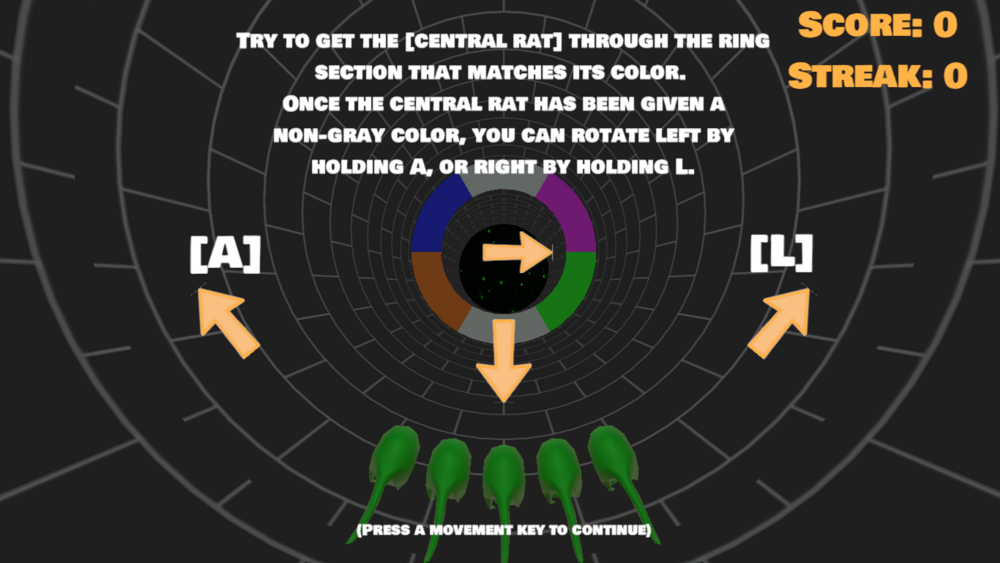
In Tunnel Runner, players try to help a family of rats escape from the laboratory of a mad scientist through a secret tunnel. To do so, they must rotate the rats so that the middle rat runs through an opening that matches its color. The other rats sometimes have the same color and sometimes a different one. Players must therefore focus on the middle rat and ignore the colors of the others, much like in the flanker task, where they must focus on the middle arrow and ignore the surrounding ones.
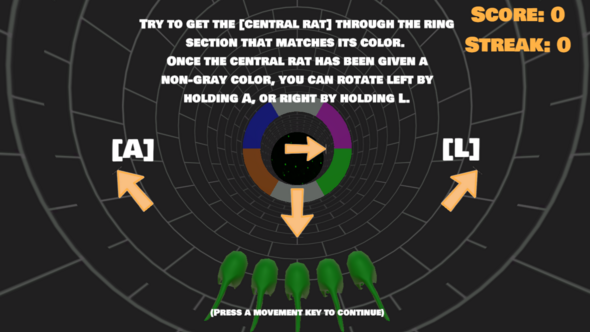
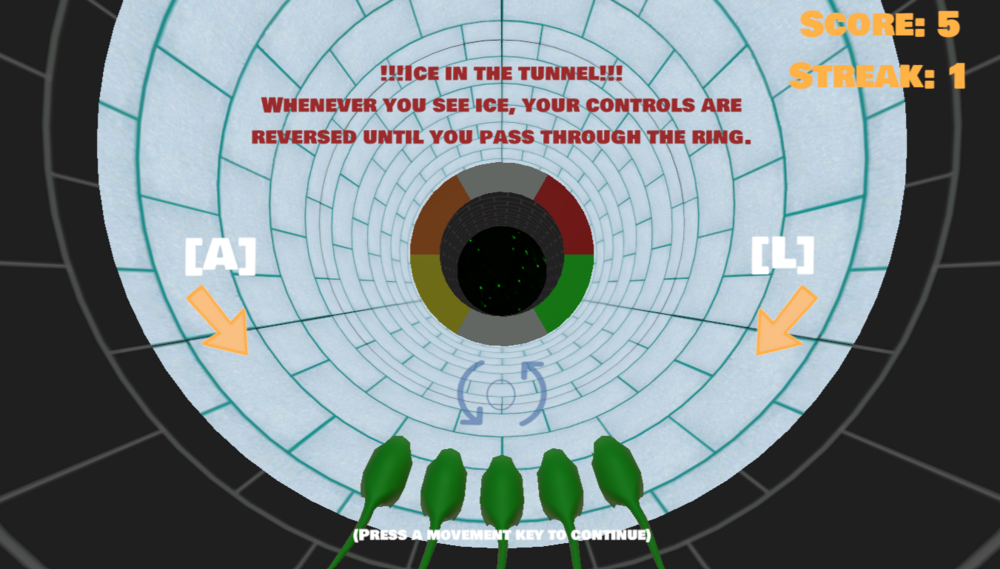
But the game gets more challenging. When lava appears in the tunnel, players must resist the urge to move the rats and do nothing instead. When ice appears, the controls are reversed, meaning that players must press the button opposite to the usual response. Players must quickly adapt to these changing rules and override their usual responses.
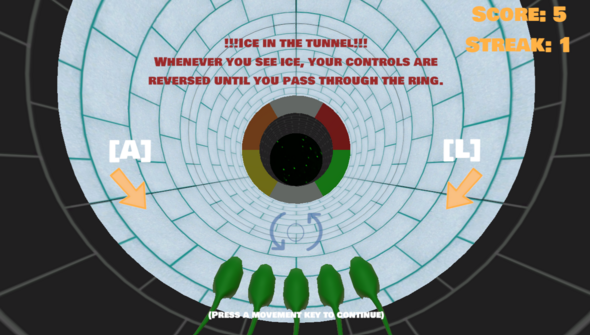
Curious to try it yourself? You can play a demo of Tunnel Runner online.
A sense of control
In this way, the game combines several cognitive challenges. Unlike the traditional flanker task, in which players repeatedly perform the same type of exercise, Tunnel Runner requires them to respond appropriately to different situations. Meanwhile, the system records whether players make the correct choices and how quickly they respond. Correct responses earn points and allow players to build up consecutive successful actions, known as streaks.
According to Markovitch, the game’s appeal goes beyond its design. “The player actually has control over what happens. That’s one of the magical things about games and why people keep playing.” He believes this sense of control is fundamental to human motivation: “People want to feel that they have control over their world.”
A better experience
The experiments showed that measurements from Tunnel Runner generally reflected the patterns the researchers expected to see. Participants also rated the gaming experience much more positively than traditional cognitive tests.
The researchers also tested the game online with more than 1,000 participants. The results showed that people who rarely play computer games had more difficulty with certain tasks and felt less skilled while playing. Researchers therefore need to take participants’ previous gaming experience into account as well.
How old is your brain?
One of the most striking findings was that the researchers could predict participants’ ages fairly accurately based on their gameplay. The model did this by analyzing cognitive performance patterns in the way participants played the game and using them to estimate their age. According to Markovitch, the method even outperforms age estimates based on facial images and DNA and comes close to predictions based on brain scans.
“Predicting age wasn’t the primary goal of our research, but we were surprised by how well it worked.”
The potential application is intriguing. If researchers can track cognitive changes in an accessible, engaging way, a game could eventually help identify people who may need more extensive testing, for example, if changes in their gameplay suggest a decline in cognitive performance.
But that future is still some way off. For now, the game doesn’t simply tell players, “You’re cognitively 53 years old.” Further research and modeling are needed to make that possible. The game could also be adapted to suit specific measurement goals, for example by adding cognitive challenges that are better at predicting age or removing elements that contribute little to those predictions.
The game changes the measurement
One important challenge is keeping the game engaging even when people play it repeatedly. This is necessary to track cognitive functions over longer periods. But players may become bored or, conversely, get better at the tasks, causing their performance to change. In other words, the game itself may influence what researchers are trying to measure.
Markovitch sees this not only as a challenge but also as an opportunity. A game could potentially train the brain as well as measure it. Whether this happens with Tunnel Runner remains to be investigated. So the question is not just how accurately we can measure the brain using a game, but also what that game does to the brain we are trying to measure.
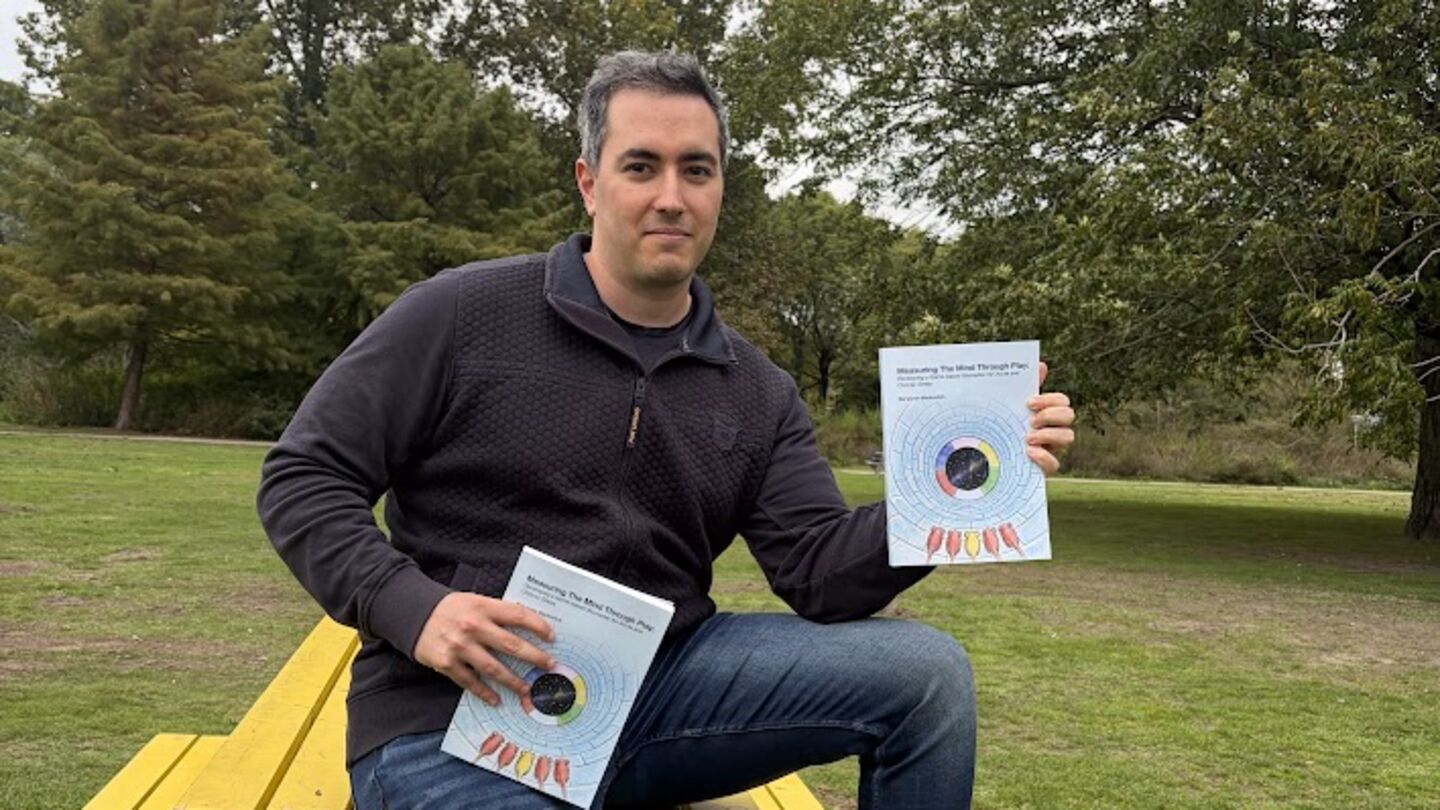
Benny Markovitch will defend his PhD thesis on October 14 at the Department of Industrial Engineering and Innovation Sciences.
PhD in the picture
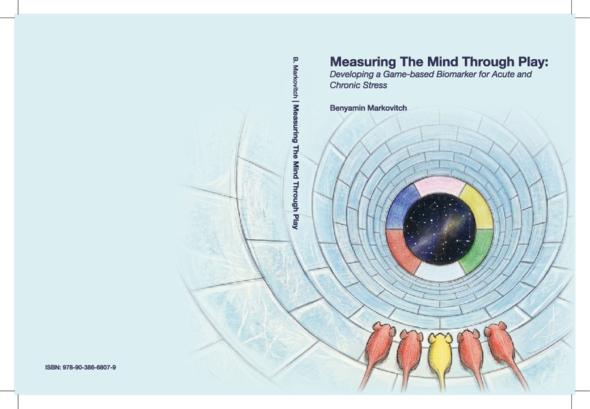
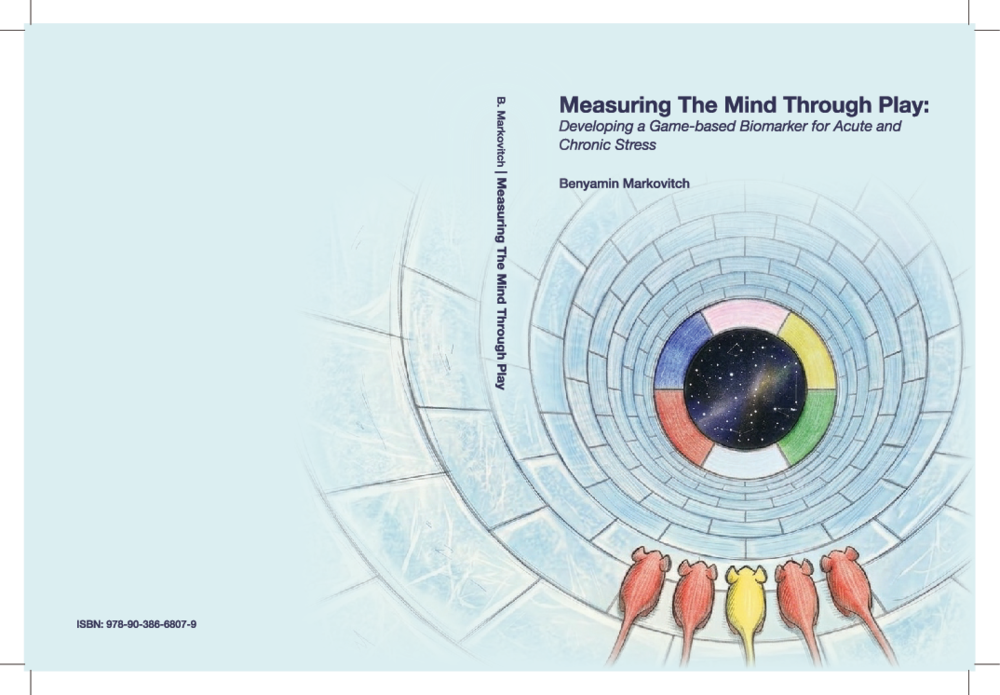
What do we see on the cover of your dissertation?
“The cover features a modified image from Tunnel Runner. It’s an artistic interpretation of the game I used in my research.”
You’re at a birthday party. How would you explain your research in one sentence?
“I use games to measure cognitive performance.”
How do you unwind outside your research?
“I enjoy gaming and regularly go to the gym. I also practice kickboxing. And, of course, I love spending time with my fiancée.”
What advice would you have liked to receive when you started your PhD?
“Above all: have a vision and see where it takes you.”
What’s the next chapter for you?
“For now, I’m continuing at TU/e as a postdoctoral researcher. I’m working on broader projects that use and characterize gameplay data, including research into how susceptible people are to deception in games. I’ll also continue working on Tunnel Runner and on measuring cognitive functions through games.”
Discussion