- Research
- 8 min
- 19/10/2026

Home Stretch | Control over the night with tailored support
Dementia researcher Chantal Huisman: “A better night starts with the person, not the technology”
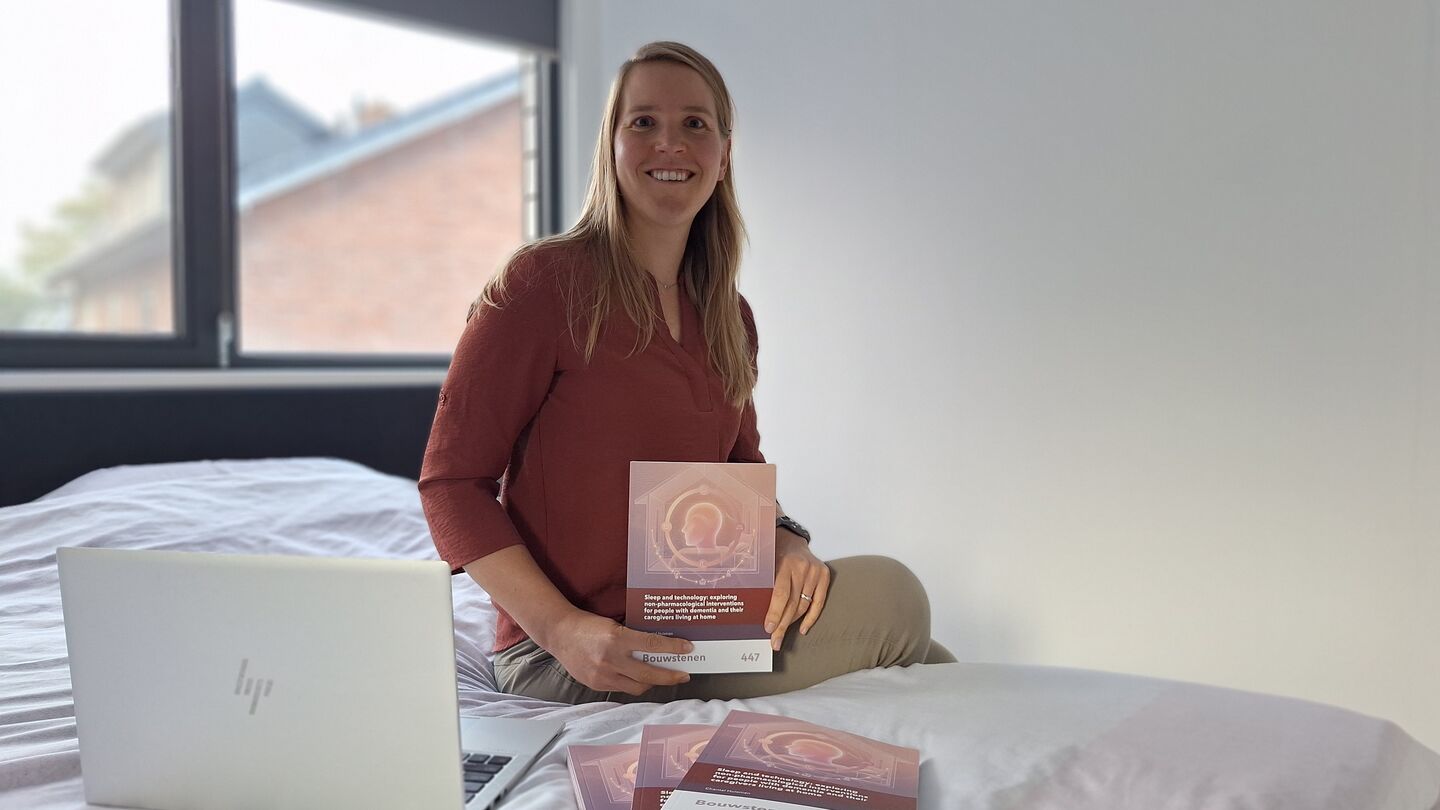
With the right support, disrupted sleep patterns in people with dementia can often be improved, TU/e PhD candidate Chantal Huisman has found. This benefits not only the person with dementia, but also their informal caregiver. “By putting the person first, we can achieve better nights and better days.”
She’s no Sandman, Chantal Huisman says with a laugh, but she’s determined. “We can’t restore uninterrupted sleep to everyone with dementia. However, we have seen that we can provide support by matching the right aid to the right person. This doesn’t involve medication, but rather other forms of sleep support, ranging from a music blanket to a smart app. This can greatly improve the quality of life of both the person with dementia and their informal caregiver.”
Huisman argues that when it comes to assistive technology for people with dementia, it is important to look beyond the device itself and consider the person’s entire living environment.
“The person with dementia and their informal caregiver are a unit. Research should treat them as such, too.” Her dissertation offers an initial step in that direction: a practical framework for studying sleep patterns in this population in a way that takes their specific needs into account.
Her interest in sleep among people with dementia began during her studies in Healthcare Management at University of Applied Sciences Utrecht (HU). As a researcher at HU’s research group on the Use of Technology in Health and Well-Being, Huisman explored the subject in greater depth.
So when the opportunity arose to contribute to dementia care through practice-oriented research as an external PhD candidate at TU/e, she seized it. On Monday, October 19, she will defend her dissertation at the Department of the Built Environment.
Off the radar
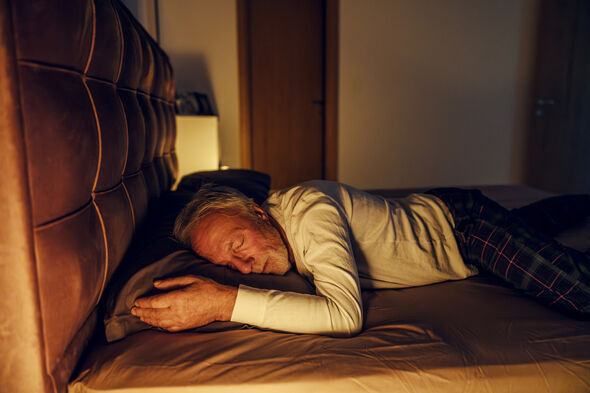
During her research, Huisman spoke with many people with dementia and their informal caregivers. One thing that stood out to her was how often sleep problems go unnoticed for a long time.
“People don’t tend to focus on them at first. That’s understandable: dementia is a very complex condition that brings many challenges. I often hear people say, ‘Everyone has a bad night now and then.’ But when you ask a few more questions, it often turns out that there is more going on.”
Case managers and other care professionals are not always fully aware of sleep-related problems either. Much of the attention tends to focus on care during the day. Huisman hopes her research will help sleep problems be recognized earlier.
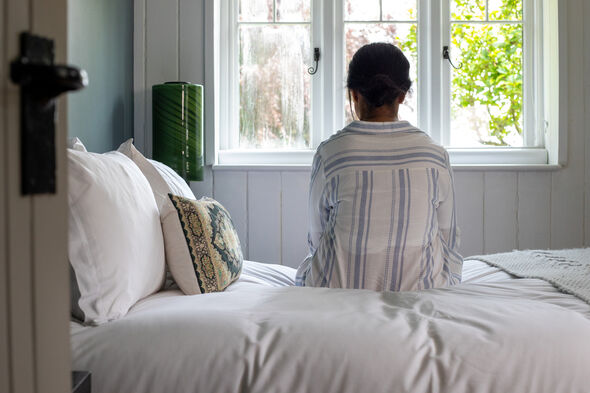
“Informal caregivers often don’t raise the alarm until the sleep situation has become very serious. By that stage, it is often too late for sleep support to be effective, partly because the caregiver is already overburdened. But our research shows that intervening earlier can still make a real difference.”
Making it manageable
Ideally, Huisman says, a case manager could play an important role in identifying potential problems. If sleep difficulties arise, the case manager could refer the person to a care professional who combines knowledge of technology with an understanding of the person behind the care request. Any assistive device must also fit the individual’s needs and daily life.
People want to remain in their own homes for as long as possible, Huisman emphasizes. “It’s about finding a balance. Staying at home for as long as possible is important, but the situation has to remain manageable for everyone involved. More stable sleep also helps informal caregivers keep going. With tailored support, we can make a real difference.”
In an initial study, Huisman mapped the assistive devices available for sleep support. She identified four strategies that can help improve sleep.
“These include tools that help maintain a daily routine, support the transition from day to night, and make it easier to fall asleep and stay asleep.”
Responsible sleep studies
Because relatively little sleep research has been conducted with people with dementia, Huisman devoted considerable time to designing scientifically sound, real-world studies.
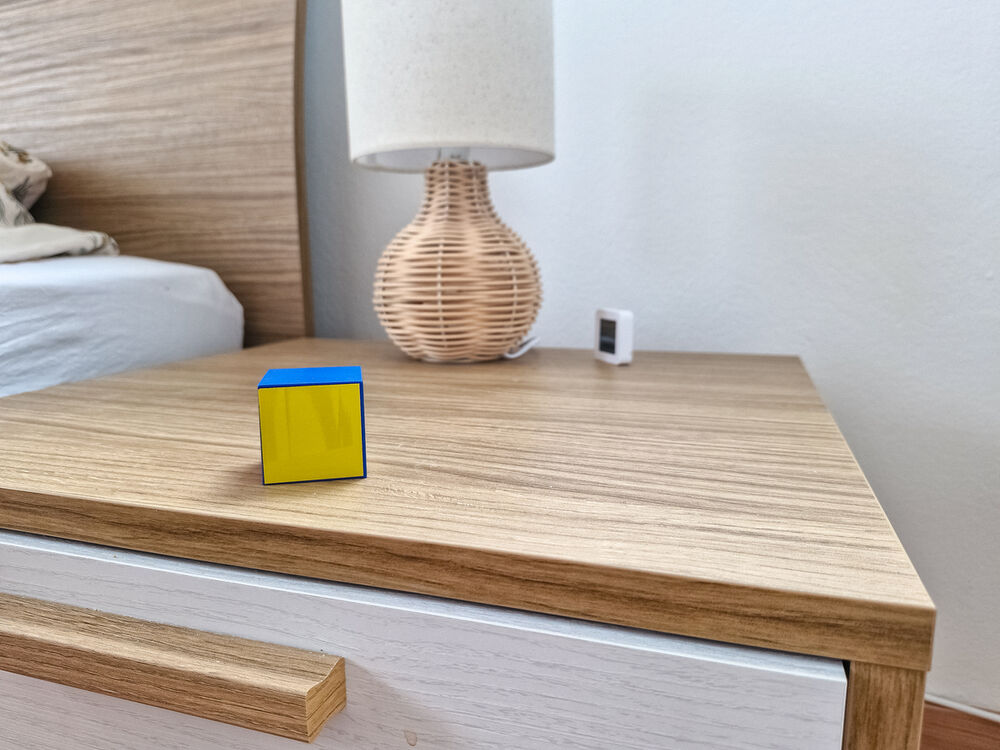
“On the one hand, we want to examine how the indoor environment, including temperature, humidity, and CO2 levels, affects sleep patterns. On the other hand, we also need to be able to test whether an assistive device is effective.”
According to Huisman, conducting sleep research with a vulnerable population makes the process particularly complex. Even a small change in daily routines can have a significant impact on someone with dementia.
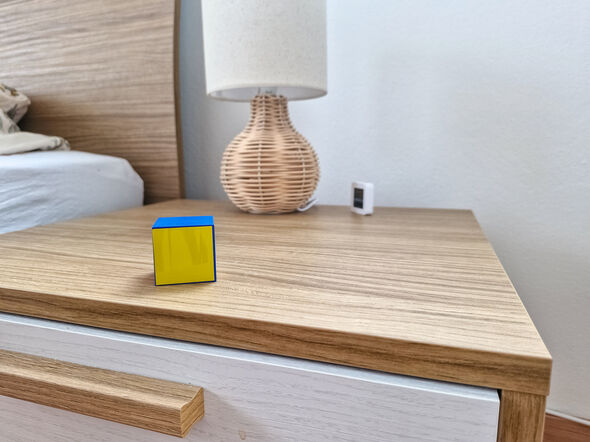
“One participant became very restless because of the sensors we had placed in his bedroom. He was in bed with a viral infection, but he thought our sensors were making him sick.”
Suspicious
Other participants also did not always feel comfortable having technology in their bedrooms. Research conducted in the bedroom therefore requires extra care, she adds with a knowing smile.
“People became suspicious: what exactly could we see with those sensors?” By presenting research protocols to a panel of people with lived experience at an early stage, we can truly put the person with dementia first and better respond to their feelings and needs.”
This led to concrete changes. For example, she eliminated the requirement to fill out a sleep diary every day. In an upcoming follow-up study, DREAM, which will once again involve collaboration between HU and TU/e, among others, she can also directly address participants’ reluctance to receive weekly home visits.
Breathing robot
Huisman then tested the step-by-step approach to sleep research in people with dementia that she had developed along the way in a real-world study involving various assistive devices. For five weeks, participants received sleep support tailored to their daily lives. The options ranged from a weighted blanket or a breathing robot to a structured planning app.
Huisman emphasizes that it is too early to draw firm conclusions from this study. Recruiting a large group of participants is very difficult because people with dementia are frequently asked to take part in research. Nevertheless, the positive feedback from participants gives her reason to be optimistic.
“By tailoring support to the individual and their environment, we show that it is indeed possible to improve sleep patterns in people with dementia. This, in turn, can help improve the quality of their days.”
Huisman also wants to convey this message to developers of technology for people with dementia: start with the user’s needs, not the technology.
“Many assistive devices for people with dementia are developed without first investigating what the target group actually needs. That’s why we continually emphasize to the next generation of designers that they should develop solutions based on people’s needs. Technology should adapt to people, not the other way around. For example, design a product that adapts to its user. After all, everyone has different needs.”
PhD in the Picture
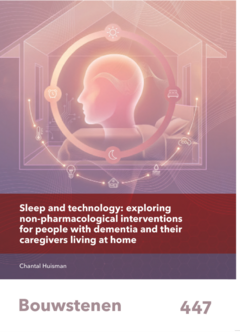
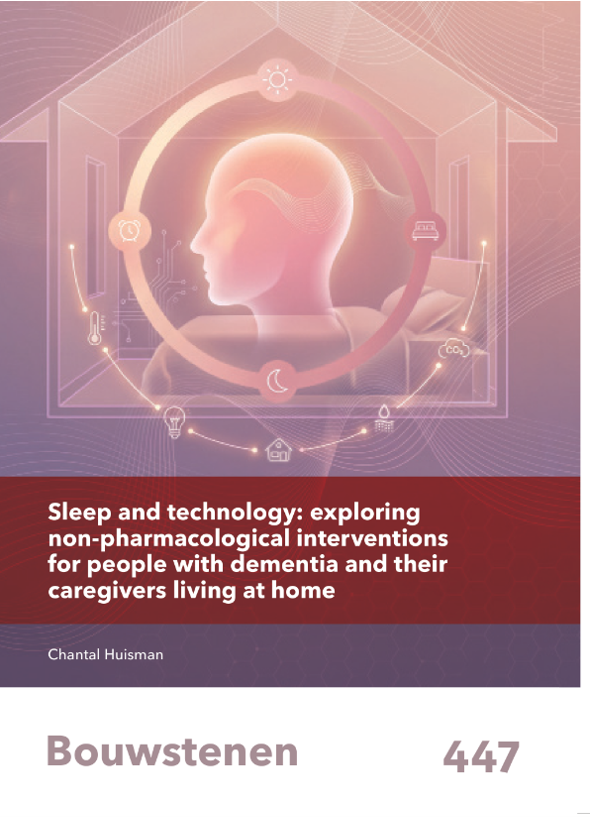
What do we see on the cover of your dissertation?
“A large head, a bed, a house, the moon, and the sun. I want to show that we put the person at the center of sleep research on dementia, while also looking at the bigger picture.”
You’re at a birthday party. How would you explain your research in one sentence?
“I investigated how we can support people with dementia who live at home in getting better sleep, thereby easing the burden on their informal caregivers.”
How do you unwind outside your research?
“I love being outdoors, going for a nice walk or mountain biking. It’s good for sleep hygiene, too.”
What advice would you have liked to receive when you started your PhD?
“A PhD project is a marathon, not a sprint. I often had to remind myself of that when things in practice turned out differently from how I had envisioned them in theory.”
What’s the next chapter for you?
“Alzheimer Nederland recently awarded me a grant for new dementia research. Over the coming months, I’ll continue working on the DREAM study with TU/e. Starting in January, I’ll take up a position as a Dementia Fellow and investigate more broadly how technology can be used more effectively to support people with dementia in their own homes.”
Discussion