- Education
- 4 min
- 28/05/2026
Learning without borders: a blueprint for European education
Joint course offered by three universities proves to be a successful pilot
Developing and teaching a course together with universities from different countries: for TU/e, it was an experiment that leaves room for more. The new EuroTeQ course Digital Twins for Digital Society, developed with the technical universities of Tallinn and Prague, is intended to serve as a blueprint for future international collaborations in higher education.
EuroTeQ Engineering University is a collaboration of European technical universities working on the internationalization of engineering education. Through joint and partially online courses, students learn beyond the boundaries of their own university, focusing on societal challenges such as sustainability, digitalization, and energy.
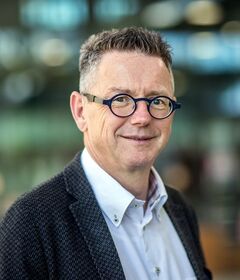
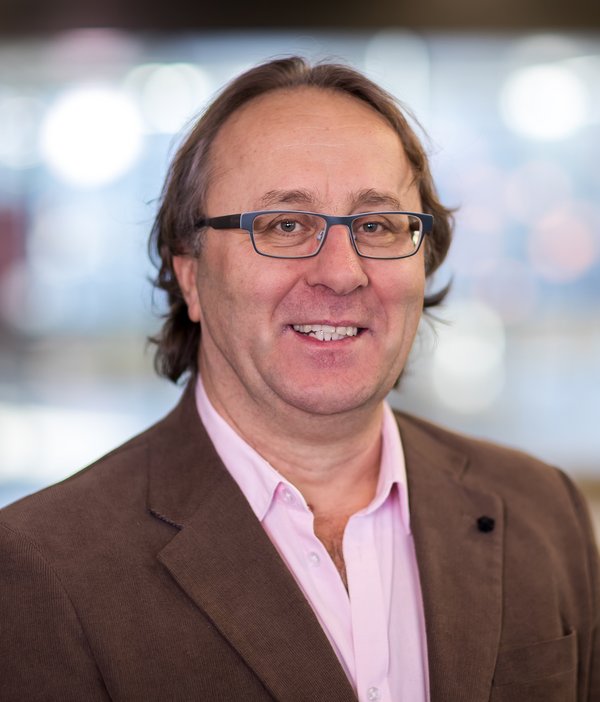
Within EuroTeQ, universities develop joint online and hybrid courses. However, previous experiences with this course offering have been mixed, says Professor of Software Engineering Mark van den Brand from the Department of Mathematics & Computer Science.
“My experience was that the enthusiasm of EuroTeQ students fluctuated significantly,” he says. “It often started with a larger group of students, but in the end only a few took the exam. So the effectiveness was rather low.”
EuroTeQ consists of 9 universities, including TU/e as the Dutch partner, along with the Technical University of Munich (Germany), Technical University of Denmark, Czech Technical University in Prague (Czech Republic), Tallinn University of Technology (Estonia), École Polytechnique (France), and EPFL – École Polytechnique Fédérale de Lausanne (Switzerland), as well as the business schools HEC Paris (France) and IESE Business School (Spain).
During a winter school in Tallinn, lecturers from different EuroTeQ universities therefore met to discuss how to make the courses more attractive. This is where the idea for a jointly developed course emerged. “The idea was: if you involve other universities in developing a course, you also immediately attract their students.”
Jointly developed
This eventually led to Digital Twins for Digital Society, a course on digital twins and their societal applications. The course was jointly developed by lecturers from TU/e, Tallinn University of Technology, and Czech Technical University in Prague. From TU/e, Assistant Professor Ion Barosan was involved.
According to Van den Brand, the strength of the collaboration lies primarily in the combination of different areas of expertise. “Everyone contributed their knowledge. Ion Barosan had a lot of material on engineering digital twins. Tallinn contributed expertise in digital society, and Prague contributed material on user interface design.”
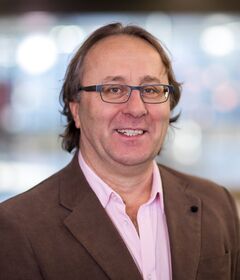
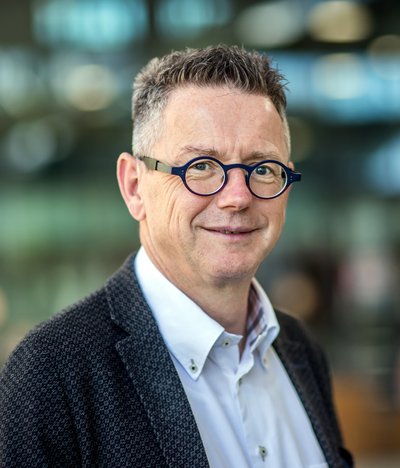
Barosan also emphasizes the international character as one of the project’s key strengths. “Students were exposed to different academic cultures, teaching styles, and areas of expertise,” he says. “As one student reflected: ‘Being part of such an international environment made the experience even more impactful.’”
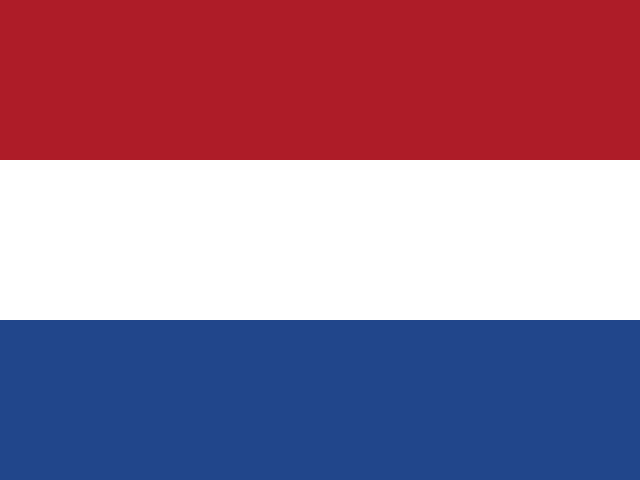
The course combined online lectures, workshops, and project-based learning with a final in-person week on the TU/e campus (see main photo). During this so-called Capstone Week, students worked on digital twins of the TU/e campus and broader societal challenges.
“The ultimate goal was not simply to teach technology,” Barosan explains, “but to help students understand how Digital Twins can become tools for creating smarter, more sustainable, and more human-centered societies.”
Largest so far
The course ran in the third quarter and immediately reached its maximum capacity of 40 students. According to Van den Brand, this is exceptional within EuroTeQ. “It was the largest course EuroTeQ has ever had,” he says. “And almost all students eventually came to the campus.”
He also saw this enthusiasm during the final project week in Eindhoven. “The fact that 35 people were seriously working on an assignment on campus shows that the course resonated.”
Students worked in international and multidisciplinary teams during the course. According to Barosan, this mix of backgrounds proved especially valuable. “Students learned not only technical skills, but also how to collaborate across cultures, disciplines, and perspectives.”
The physical week on the TU/e campus played an important role in that process. “Bringing students together physically accelerated collaboration, strengthened relationships, and created memorable learning experiences,” he adds.
Van den Brand also says the week gave TU/e the opportunity to showcase itself to international students. “We were able to show them what we are working on here, from the Automotive Lab to innovation Space. The students were quite impressed by the facilities we have here.”
Blueprint
The course was not only meant to deliver a single class, but also to serve as a blueprint for future international collaborations. “From the beginning, our goal was not only to develop a course, but also to set an example for similar joint initiatives,” says Van den Brand. Teacher Support at TU/e, as well as at the partner universities, was therefore closely involved in the project.
Although the content preparation was relatively efficient thanks to the reuse of existing teaching material, the project also came with organizational challenges when working across national borders.
“In Tallinn, all courses are six credits, while ours are five,” says Van den Brand. “And how do you arrange exams for students who are abroad? These are things you need to carefully consider within EuroTeQ.”
Barosan emphasizes that much of the smooth coordination between the partner universities was made possible through the efforts of Meagin van der Westhuizen and Daian Yan Saman from ESA, who handled communication, scheduling, logistics, and coordination between the institutions.
Learning experience
Barosan also mentions aligning educational rules, schedules, and technological infrastructure as key challenges. At the same time, he sees this as a learning experience. “In many ways, these challenges reflected the same interoperability and integration challenges that Digital Twin systems face in practice.”
Despite these obstacles, the lecturers involved are enthusiastic enough to offer the course again next academic year. Where exactly it will take place is still undecided. “Whether it will be with us again or maybe in Prague or Tallinn, we don’t know yet,” says Van den Brand. “But we hope to reach even more students next year.”
For Barosan, the project mainly demonstrates what European collaboration in higher education can achieve. “The course showed that innovation truly has no borders.”
This article was translated using AI-assisted tools and reviewed by an editor
Discussion