- Research
- 4 min
- 17/11/2026

Home stretch | Calculating a fairer world
Finding the balance between fairness and efficiency
Mathematicians develop models and algorithms to find optimal solutions to all kinds of problems. But what happens when those solutions affect people’s lives? From kidney transplants to sports competitions, TU/e researcher Sten Wessel explores in his dissertation how mathematics can help us find fairer solutions.
“Essentially, you can try to calculate a fair solution for almost any situation involving scarcity,” says Sten Wessel. Take the COVID-19 pandemic, for example: if only a limited number of vaccine doses are available, who should be invited to get vaccinated first? And if hospitals become overwhelmed, who should get a hospital bed?
“Mathematical models allow you to run different scenarios and explore which distribution would be the fairest,” Wessel explains.
But his PhD research goes beyond these high-stakes questions. Fairness can also play an important role in situations with less far-reaching consequences. In his dissertation, for example, he explores how to make sports schedules fairer.
Sports are close to Wessel’s heart. As a baseball umpire, he knows the practical side of the game firsthand. And it turns out that the world of sports offers plenty of interesting scenarios that lend themselves perfectly to a mathematical approach.
Home and away games
One of the problems Wessel looked at involves competition schedules with home and away games. “Playing at home gives you a statistically greater chance of winning,” he explains. It’s similar to chess, where white moves first and therefore has an advantage.
If every team plays each opponent twice, once at home and once away (or, in chess, once as white and once as black), this is not an issue. But some competitions use formats in which teams face each other only once.
In those cases, it matters which opponents you get to play at home. “A team that plays most of its home games against strong opponents benefits more from home-field advantage than a team that plays at home against teams it would probably beat anyway,” Wessel explains. This can give stronger teams a considerable advantage.
Playing black or white
In many competitions, the strength of the players is not given enough consideration when match schedules are drawn up. Chess is one example: the assignment of colors is often determined randomly. “At the Tata Steel Chess Tournament, we saw that the schedules were quite unbalanced in some years,” Wessel says.
He investigated how mathematical models could be used to make these schedules fairer. Chess players’ skill levels can be measured quite accurately using their Elo ratings. By taking these ratings into account, the advantages can be distributed as evenly as possible. “For example, you might play the strongest player as white, the second-strongest as black, and so on,” Wessel explains.
The strength of the opponents
Wessel also studied so-called incomplete round-robin tournaments, in which all teams play the same number of games but do not face every other team. Since 2024, the UEFA Champions League has also used this format: during the league phase, 36 teams each play eight different opponents. A draw determines which teams they face.
As a result, one team might happen to draw eight particularly strong opponents, while another gets a relatively easy schedule. “We looked at how to make the average strength of each team’s opponents more equal. It’s difficult to determine that strength precisely, but this approach is at least fairer than a random draw.”
The fairness of randomness
Sometimes, however, the opposite is true: introducing more randomness can actually make a distribution fairer. One example is kidney exchange programs, in which donors are matched with people who need a kidney.
When someone needs a kidney, the first step is often to look for a suitable donor among family members or friends. But a donor and recipient may not be compatible, for example because of their blood types. National and international kidney exchange programs can offer another way to find a match. A donor might donate to someone else, while their intended recipient receives a kidney from a different donor.
This makes it possible to help more people, but not everyone. Who gets a kidney, and who doesn’t? These are life-changing decisions that require great care. “Mathematical models can help calculate which combination of donors and recipients will result in the greatest number of successful transplants,” Wessel explains.
But the solution that helps the most people is not necessarily the fairest one. Focusing exclusively on efficiency can mean that certain patients are consistently left out.
Beyond efficiency
There are countless ways to match donors with recipients. Many possible scenarios differ very little in terms of efficiency, yet each one helps a different group of people. “Of course, you can only implement one scenario. So the question is: which one do you choose?” Wessel says.
In his dissertation, he proposes a new approach. “Instead of choosing a single ideal solution, we select a number of scenarios that meet certain criteria, such as being sufficiently efficient.
“That eliminates scenarios in which relatively few people receive help. We then use a lottery to select one of the remaining options: a kind of digital dice roll determines which scenario is implemented.”
Even with this approach, some people will still miss out. “But at least everyone has a chance of receiving help. We can express that chance as a percentage, and it is the same for everyone.” In that sense, this is fairer than allowing an algorithm to rule certain people out from the start based solely on efficiency.
There is always a trade-off: you want to help as many people as possible while also treating them as fairly as possible, without disadvantaging particular groups. Efficiency and fairness are therefore, to some extent, competing goals.
“The key is finding the right balance. Once you have a clear idea of what matters most, mathematics can help you explore which solution best reflects those priorities,” Wessel says.
Sten Wessel will defend his dissertation on November 17 at the Department of Mathematics and Computer Science.
PhD in the picture
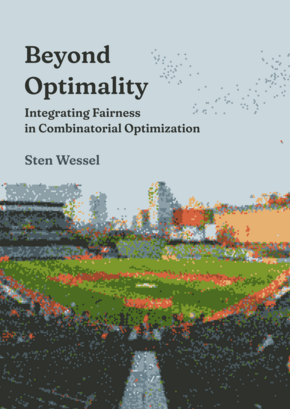
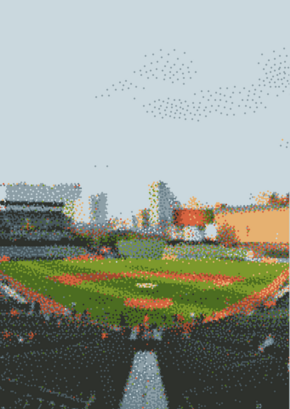
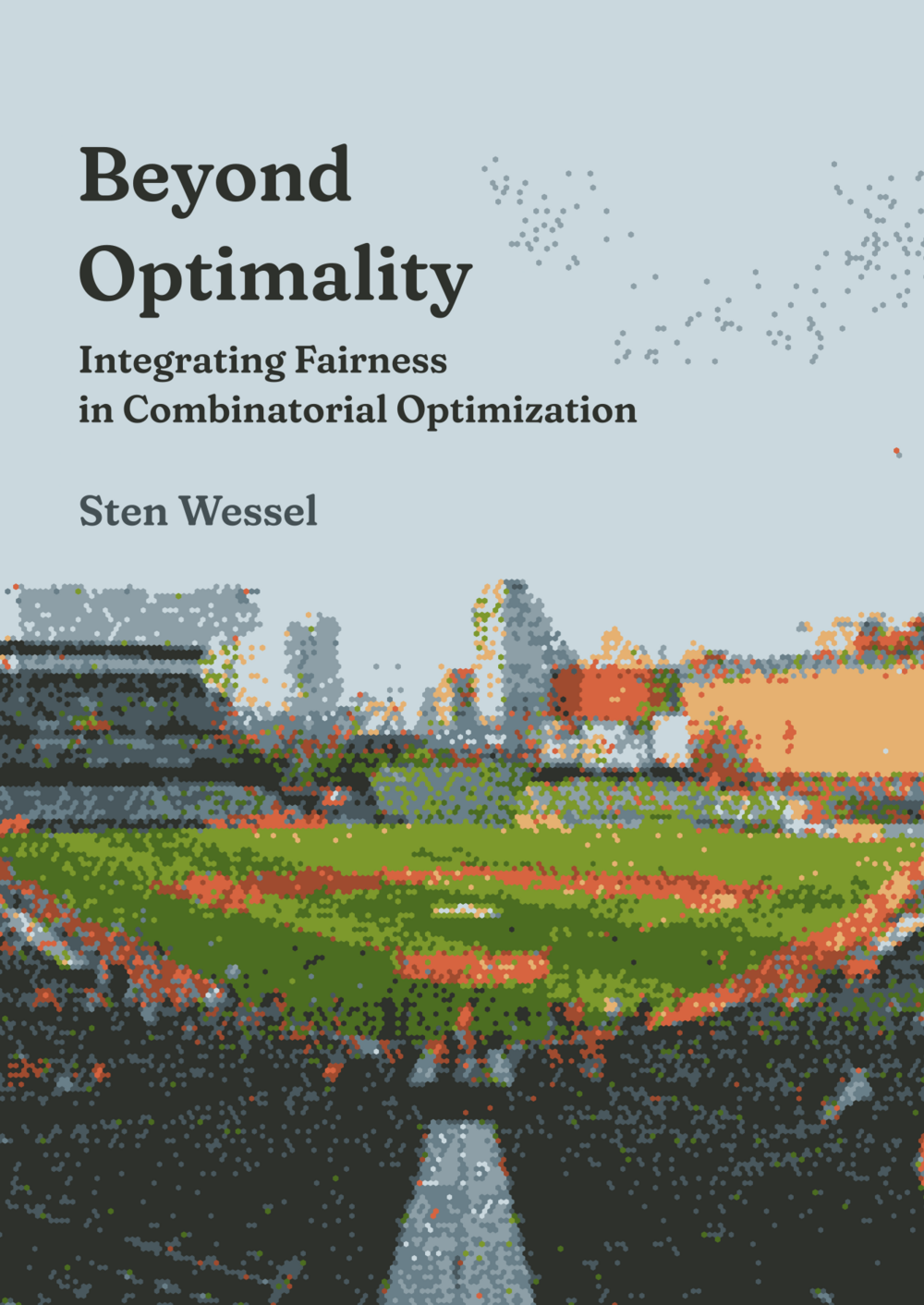
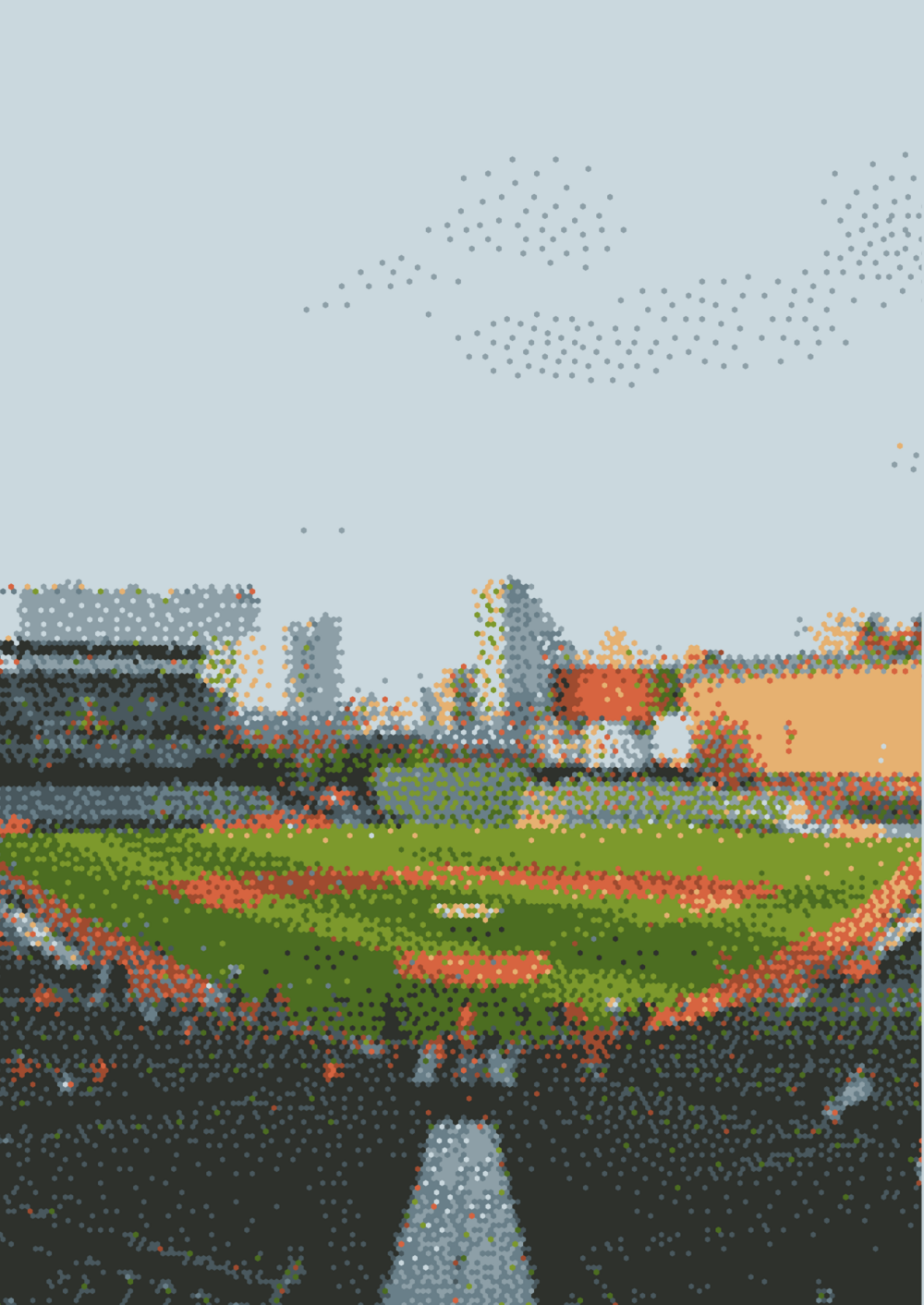
What do we see on the cover of your dissertation?
“The front cover shows a baseball field made up of pixels in a limited range of colors. The colors are distributed randomly across the image. On the back, you see the same image, but with the pixels arranged in a more balanced way, so they better match the original colors. The image essentially illustrates the central idea behind my research: the difference between a random distribution and a more balanced solution.”
You’re at a birthday party. How do you explain your research in one sentence?
“I study how mathematics can be used to find solutions that are not only efficient but also fair.”
How do you unwind outside of your research?
“I find sports a great way to relax. As a baseball umpire, I regularly travel to games in the Netherlands and abroad. My job is to make sure everything is played according to the rules. I really enjoy doing that.”
What advice would you have liked to receive when you started your PhD?
“Don’t be afraid to try different things. You have quite a lot of freedom, so make the most of it by exploring different directions and discovering what works for you.”
What’s the next chapter for you?
“For now, I’ll be staying at TU/e as a postdoctoral researcher, continuing my work on fairness. I enjoy diving into concrete problems and then figuring out how to solve them.”
Discussion