- Research
- 5 min
- 27/11/2026
Home stretch | Keeping an eye on the heart
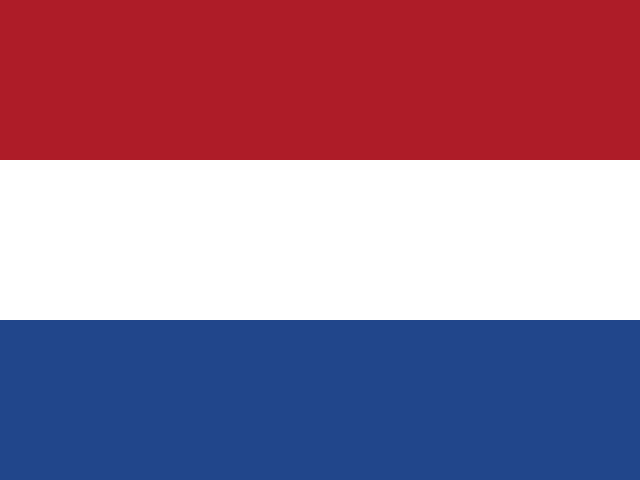
Mayke van Leunen explores how remote patient monitoring can help prevent hospital admissions
Changes in heart rate can predict an impending hospital admission in patients with chronic heart failure, TU/e researcher and physician in training Mayke van Leunen has discovered. Her PhD research shows how smart technology and remote care can help patients living with chronic heart failure.
The coffee was often already waiting when Mayke van Leunen visited patients at home, coming from the Department of Cardiology at Máxima Medical Center (Máxima MC). “My patient group is relatively vulnerable and elderly. I solved so many technical problems to save study participants a trip to the hospital. And over that cup of coffee, I sometimes heard the most wonderful stories.”
Van Leunen has been working in cardiac care for some time. She combines her clinical experience as a physician with scientific research. In January, she will begin her cardiology residency. In recent years, her doctoral research has focused on the use of remote care for patients with chronic heart failure.
Heart failure occurs when the heart cannot pump enough blood around the body, which has a major impact on quality of life. Organs and muscles receive less oxygen and nutrients, which can lead to fatigue, shortness of breath, and fluid retention. The condition mainly affects older people: most patients are over 75.
The risk of hospital readmission following an acute hospitalization for heart failure is high, Van Leunen emphasizes. “Within one to three months, we see one-third of these patients back in the hospital. This is what we call the high-risk group.”
Alarm bells
With new care pathways, including remote monitoring and specialized support, cardiologists and researchers such as Van Leunen are trying to reduce hospital readmissions.
Technology is making more and more things possible, Van Leunen explains. Around ten years ago, Máxima MC was among the first hospitals in the Netherlands to introduce remote monitoring, which allows patients to measure various health indicators at home every day, including their weight and blood pressure. Van Leunen investigated what this form of care means for patients and healthcare professionals.
But above all, the TU/e researcher wanted to find out whether measurements could predict a patient's deterioration before they start experiencing symptoms. This could allow doctors to intervene in time, for example by adjusting medication, and potentially prevent a hospital admission.
To investigate this, Van Leunen conducted several retrospective studies involving high-risk heart failure patients who had been discharged home following an acute hospitalization. She used two types of smart wristbands, the Philips Data Logger and the Health Band, to collect health data. She compared measurements from the two to three weeks before a deterioration in heart failure with those from a relatively stable period. The data revealed a striking pattern: heart rate changes can be detected as early as 21 days before an acute deterioration in heart failure.
“Shortly before a patient's condition worsens, their heart rate pattern changes, almost like an alarm bell. The average heart rate increases, while the difference between daytime and nighttime heart rates becomes smaller. Using these changes, a machine learning model was able to predict when a patient would deteriorate.” Van Leunen considers this a promising result. It offers the prospect of intervening earlier and preventing hospital admissions.
Personalized care
At the same time, she has found that only a limited group of patients are both willing and able to participate successfully in remote care. This is an important consideration, particularly as remote monitoring expands to include more complex measurements. More personalized support can make a big difference, she believes, because not everyone finds it equally easy to use remote monitoring.
“Our participants are around 80 years old on average, but they are certainly willing to learn how to monitor their own health. The motivation is there, but sometimes they lack the necessary skills. We can make a big difference by providing extra support during onboarding.”
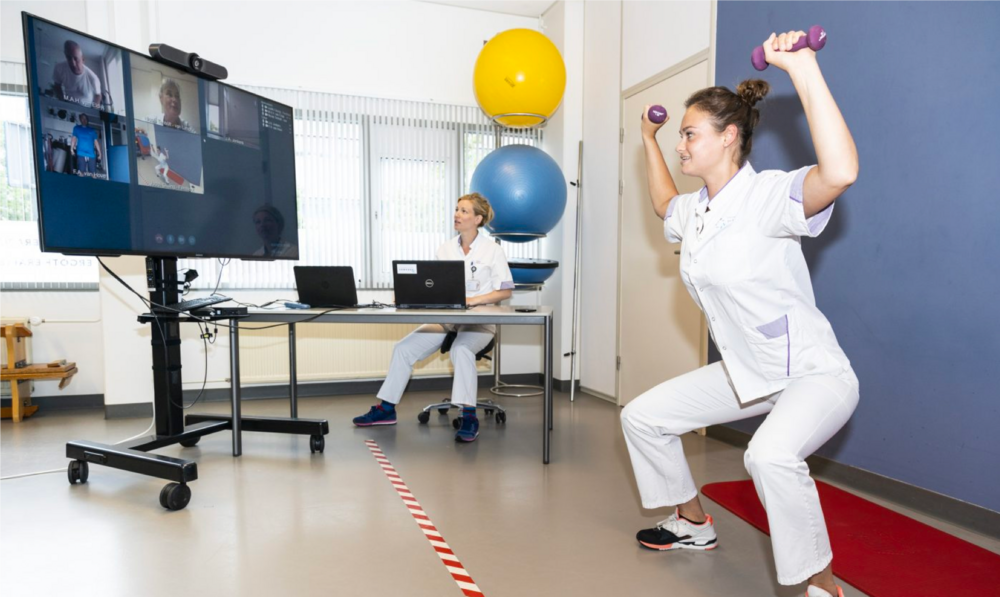
But identifying deterioration early is not enough, Van Leunen emphasizes. Recovery after a hospital stay also deserves attention. That is why she investigated how digital technology can support remote cardiac rehabilitation. The program focused on exercise, nutrition, and psychosocial well-being.
“After a hospital stay, it is especially important to support patients in their recovery. Monitoring measurements alone is not enough. We also need to help patients regain their physical fitness and independence.”
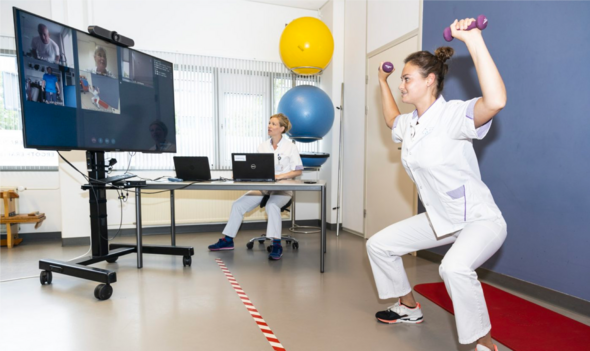
The results are cautiously positive. Patients who participated in cardiac rehabilitation in addition to remote monitoring showed greater improvements in physical functioning than those who received remote monitoring alone. Because the study was relatively small, larger follow-up studies are needed to confirm these findings.
Redesigning the care pathway
Successful remote care requires more than technology alone, Van Leunen emphasizes. The organization of healthcare also needs to change. Intensive, personalized guidance is particularly important when patients first start a remote care program. This requires additional time from healthcare professionals and, consequently, a redesign of the existing care pathway—one of the recommendations in Van Leunen's dissertation.
“Currently, a nurse practitioner or cardiologist sees patients at scheduled appointments. But with a clear remote care protocol, we don't need to maintain these standard appointments. We particularly want to see patients when changes occur.”
Trust
She also points to another challenge: healthcare professionals need to learn how to work with the new possibilities offered by technology.
“We see that specialists find it difficult to adjust their treatment based on a machine learning model, especially when the patient is not experiencing any symptoms. That's why we need to develop clear protocols and care pathways to support them in doing so.”
Van Leunen is optimistic about this. “It's also a matter of technology acceptance on the part of the specialist. And here, too, explanation, awareness, and collaboration are key.”
A major nationwide study, Cardiac Care at Home, will start soon. According to Van Leunen, it will also examine all these aspects. “We really want to reduce hospital readmissions. Our studies show that remote monitoring and cardiac rehabilitation can help us achieve that. Patients tell us that remote care makes them feel safe: we're keeping an eye on their hearts.” She laughs. “Even when we're not stopping by for coffee.”
PhD in the picture
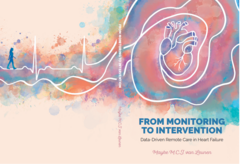
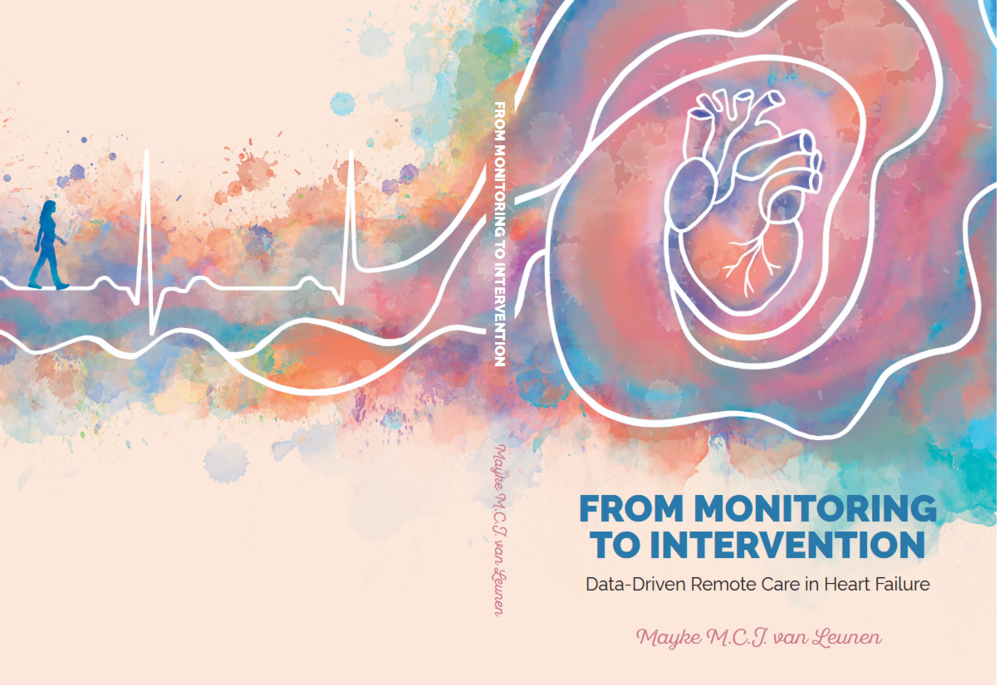
What do we see on the cover of your dissertation?
“On the back, you can see a person walking toward the heart on the front cover. This could represent a patient with chronic heart failure following a particular care pathway, but it also symbolizes my own journey toward the core of my research.”
You're at a birthday party. How would you explain your research in one sentence?
“I look at how we can improve remote care for patients with chronic heart failure, so that we can improve their physical functioning and quality of life and prevent hospital readmissions.” She smiles. “People often tell me all kinds of heart-related stories and regularly ask me for advice. It's nice that they feel comfortable sharing their personal experiences with me.”
How do you unwind outside your research?
“My husband and I really enjoy DIY projects. Every few months, we start something new. By now, I can plaster walls, reroute electrical wiring, and install irrigation systems in the garden. The kitchen is our current project, so that we can soon get back to cooking and enjoying drinks with family and friends. We like making our home smarter, much like we're trying to do in healthcare.”
What advice would you have liked to receive when you started your PhD?
“Don't let setbacks discourage you. Everything will work out in the end. That's something I've also learned from doing DIY projects: just keep going!”
What's your next chapter?
“I currently work as a resident physician in cardiology at Catharina Hospital. The Catharina and Máxima MC are increasingly working together in the field of heart failure care, so I also help facilitate an exchange of knowledge between the two hospitals. And during my cardiology residency, I'll remain involved in several heart failure studies.”
Discussion