
- Education
- 24/06/2026

Start-up gamifies challenging electromagnetism course
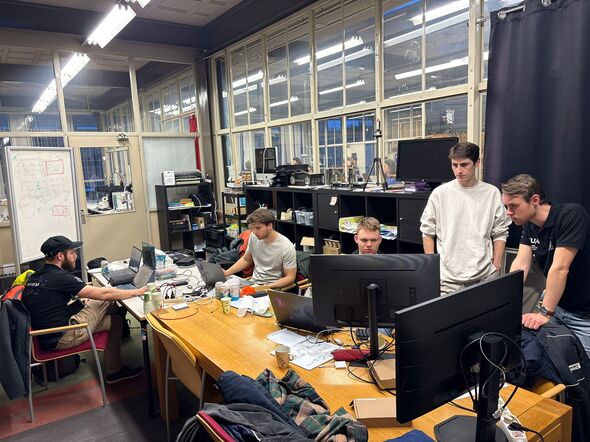
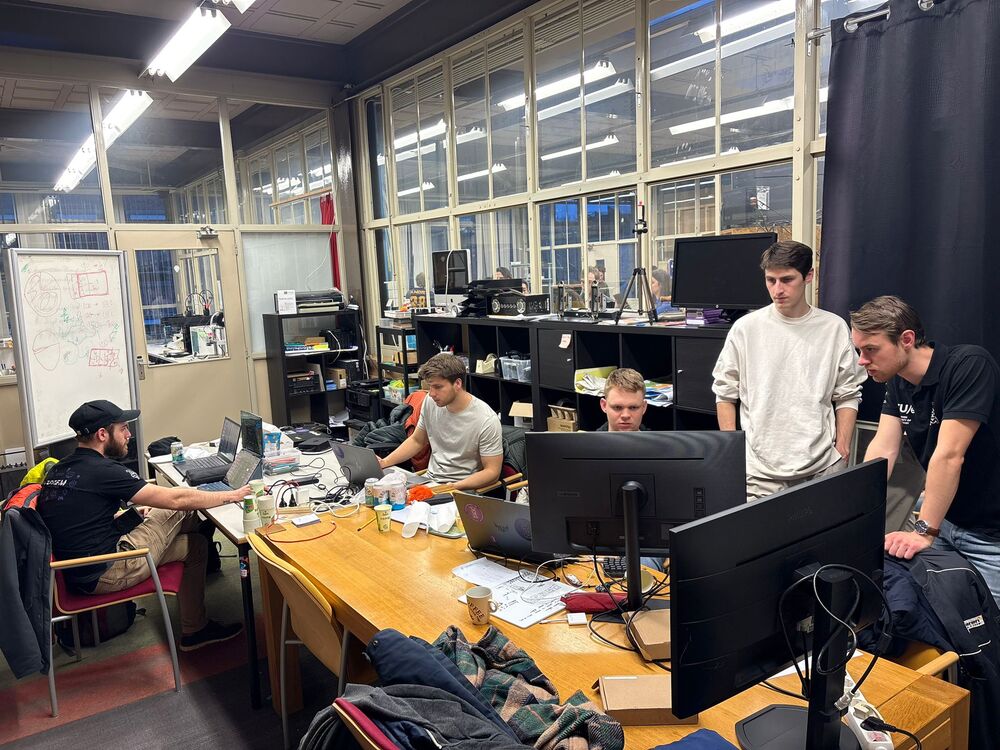
Spending hours in dusty classrooms listening to lectures on complex subject matter no longer fits the times. With that in mind, the students of Totem Game Dev founded start-up UniGames. Their goal is to turn traditional course material into educational games. Their first client: the Department of Electrical Engineering.
The idea of launching their own gamification company had been brewing within student team Totem Game Dev for quite some time. A few months ago, things really took off when the Department of Electrical Engineering approached them. A company the department had previously hired to develop a game about electromagnetism had delivered disappointing results. Totem provided advice on how to salvage the project and turn it into a workable game.
“That’s when things started to gain momentum,” says Maarten Hundscheid, team leader at Totem and co-founder of UniGames. “We thought: why not do it ourselves?”
Totem Game Dev has been working on gamification—the application of game principles and mechanics in non-game contexts—for several years. The aim is always to teach users something in an interactive way. For example, the student team has previously developed a game about the dangers of facial recognition software and another about the energy transition.
A challenging course
Electromagnetism is a notoriously challenging course. This fundamental force of nature describes the interaction between electrically charged particles: how a changing electric field generates magnetism, and vice versa. It is a broad field of study, making it difficult to master within a single semester. Many students therefore describe it as a complex subject.
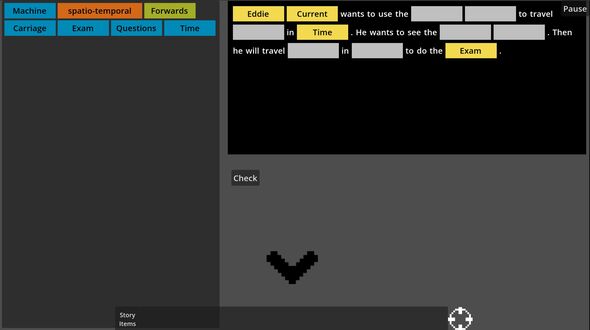
“The material is so advanced that we can't acquire that knowledge ourselves in a short amount of time,” Hundscheid explains. “The department provides the course content, and we then gradually turn it into a game. So far, we've created several puzzles that teach players how electromagnetism works, as well as the basic game mechanics and navigation.”
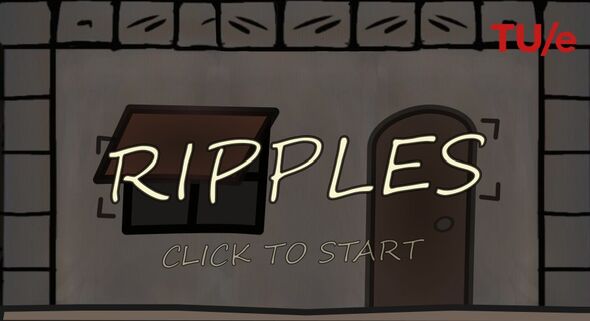
Ripples
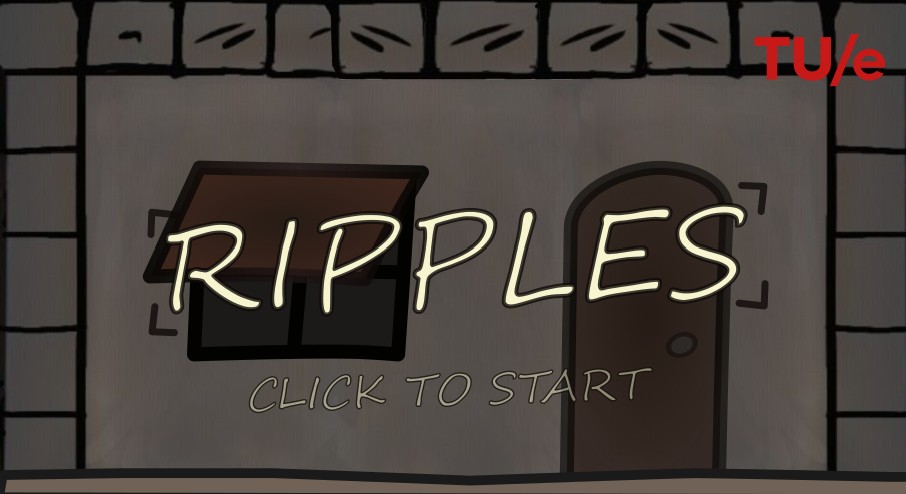
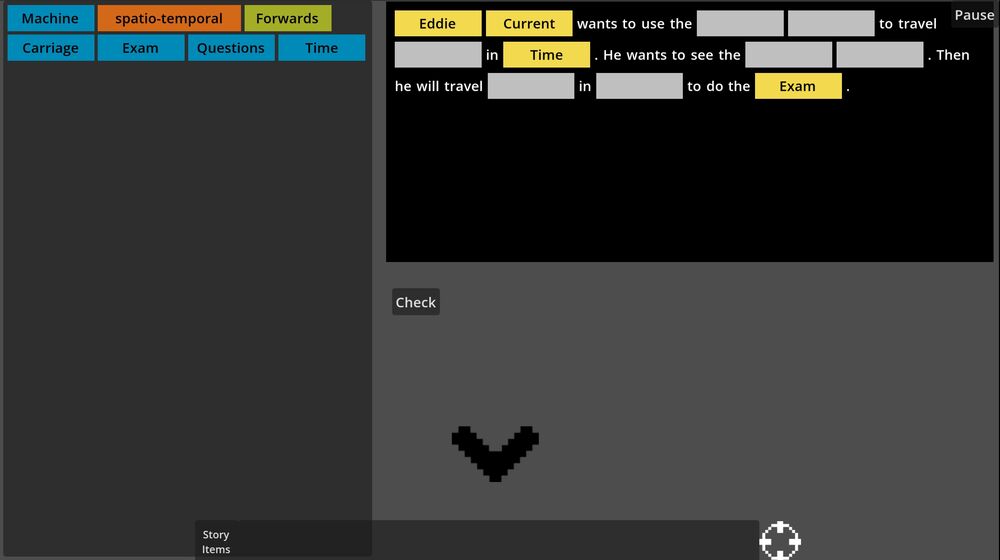
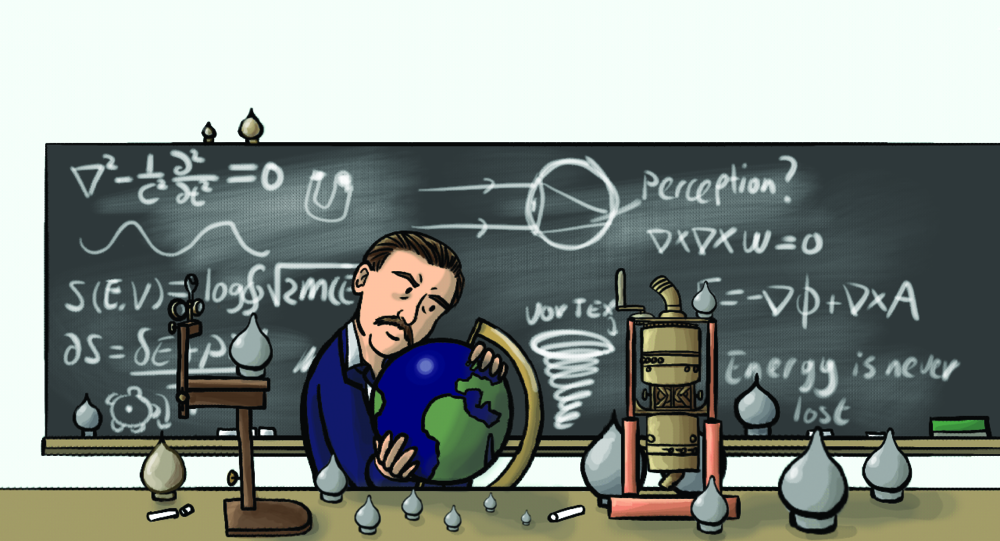
In Ripples, players take on the role of a student who has no desire to study for an electromagnetism exam. Using a time machine, the student attempts to travel to the future to view the exam questions in advance. Instead, they end up in the past, where the machine breaks down. By meeting the pioneers of electromagnetism, the student learns how to repair the machine's components.
The idea is that students learn about the history of electromagnetism through gameplay, discover its many engineering applications, and gain insight into how scientists in the past, often working with limited resources and sometimes through sheer coincidence, achieved scientific breakthroughs.
Hundscheid: “The strength of this approach is that it provides practical insights. You learn theoretical material much better when you can immediately visualize it and actively engage with it.”
Students will have to be patient a little longer before they can play the game, however. Hundscheid: “We're currently adding a self-assessment component to check whether students understand the material. This will allow the game to be integrated into the curriculum as a homework assignment.” The game is expected to become available as teaching material in the next academic year.

Building a lightsaberAssistant Professor Elles Raaijmakers maintains close contact with the students in the Totem Game Dev program. In addition to providing the necessary expertise, she also contributes to the design, storyline, and character development.
She speaks passionately about her favorite field of study. “Electromagnetism is everything. From the Aurora Borealis to a refrigerator magnet. It powers our brains and determines how we control computer chips. It's everywhere.”
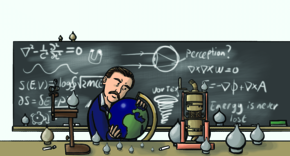
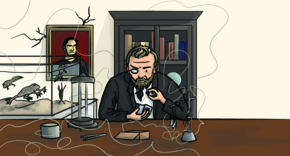
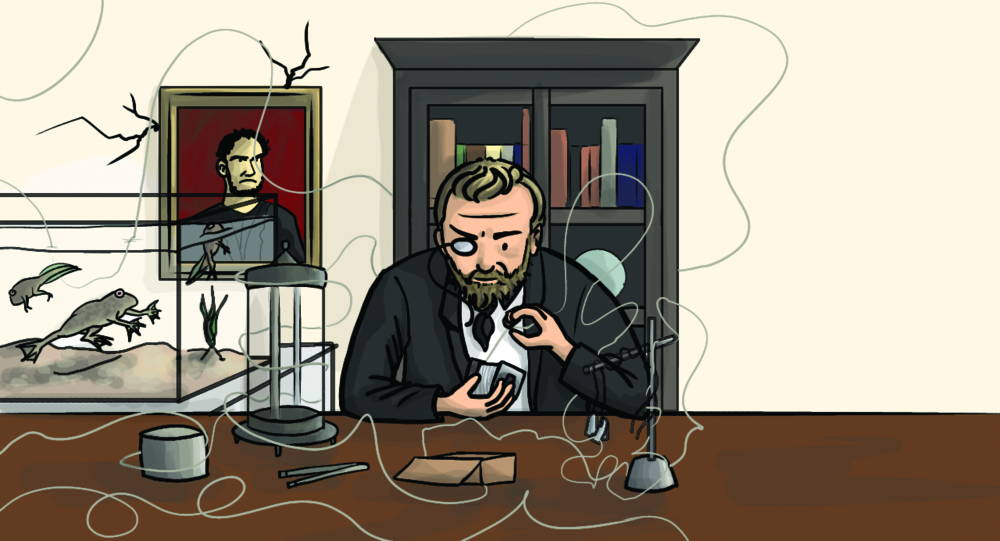
Players encounter various scientists who have contributed to the field, such as Hermann von Helmholtz. His research ultimately led to the discovery of electromagnetic waves. Players also meet Emil du Bois-Reymond. While conducting experiments on frogs, he discovered how nerves use electrical signals to transmit information throughout the body.
Together with her colleagues, she has been trying for some time to teach the subject in an interactive way. Students are given assignments such as figuring out how to build a real lightsaber. “It's highly energy inefficient.” Or how to jam a K3 concert (deliberately disrupting wireless radio signals, ed.). “With the disclaimer that it's illegal.”
Still, there is plenty of course material that students need to work through. “You need many moments of repetition to truly understand the material. With this game, we want to present the subject matter in an enjoyable way.”
Mini-games for health
While the students continue working on Ripples, another client has already signed on: the Department of Industrial Engineering. The department has been working on a gamification platform for several years.
“They want to use it to encourage healthy behavior,” Hundscheid says. “At the moment, it's still a research platform used to test whether games can promote healthy behavior. We're going to develop a range of mini-games for it. The idea is that players can make in-game purchases, not with real money, but with points. Those points are earned through healthy behavior in real life, for example one point for every kilometer walked.”
The students behind UniGames are currently in talks with other educational institutions and regional governments about new projects. In a year, they hope to have all graduated and to be able to work full-time at the company.
This article was translated using AI-assisted tools and reviewed by an editor.

Discussion