
- Employee
- 22/06/2026

TU/e aims to make better leaders, starting at the top
With a new leadership model, TU/e hopes not only to change its organizational culture, but also to address issues related to social safety and workload. Self-awareness is at the heart of the model. Members of the Executive Board, deans, and directors will be the first group to take part in the new leadership program.
TU/e has deliberately chosen to begin implementing the new leadership program (intranet) at the top of the organization. This is not only to set a good example. It is also a natural consequence of the arrival of President of the Executive Board Koen Janssen and Head of Human Resources Management Nicole Mølby-Bueters, both of whom came to TU/e from the corporate world.
They had both only just started at TU/e when the results of the Employee Experience Survey came in, a survey conducted every three years to measure employee satisfaction and well-being. “I remember asking: are we going to have a dialogue about this? I assumed that was the normal thing to do,” Mølby-Bueters recalls with a laugh.
Own role
It turned out that such a dialogue was not so common, but the conversation she had envisioned—with the Executive Board, deans, and managing directors—did take place. During those discussions, the university’s senior leaders asked themselves: what can I do differently in my role? What is my responsibility?
On many fronts
According to Nicole Mølby-Bueters, good leadership can help the organization move forward in many areas.
“We want to realize the ambitions set out in the institutional strategy, but also to improve social safety and inclusion. To achieve that, you need very strong leadership.”
For example, she sees many conflicts at the university being resolved through legal channels. “I think that’s such a shame. How can you make sure it never gets to that point?” In her view, open conversations can help prevent these situations.
More trust
According to TU/e President Koen Janssen, the relationship between the administration, the unions, and Participation is an example of how leadership can influence organizational culture. When he took office, he says, the relationship with the University Council and the unions was not particularly warm, “and that’s putting it mildly.”
Since then, Janssen has tried to foster a more open dialogue, and that appears to be working. “I think trust is beginning to grow.”
Leaders also play a major role when it comes to workload, he adds. “The answer ‘no,’ and stopping something altogether, simply isn’t part of the vocabulary here. But setting priorities is also leadership: making decisions in such a way that people can realistically carry out their work.”
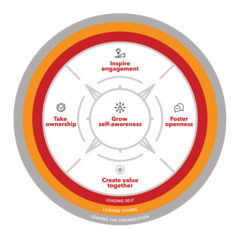
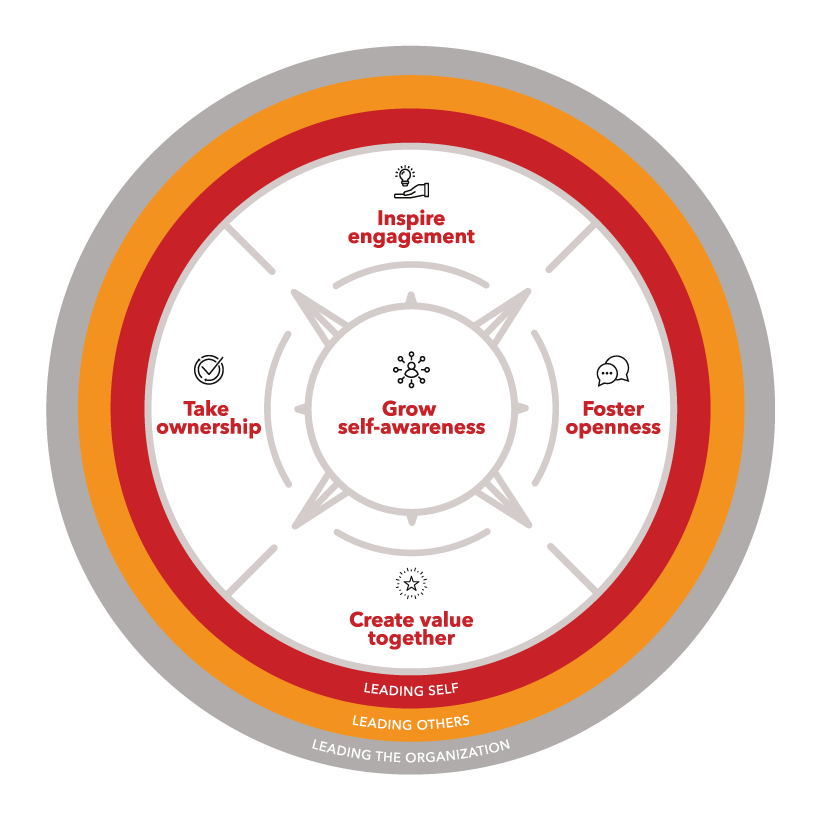
Self-awareness is central to the new leadership model, in which leading yourself forms the core, followed by leading others and leading the organization. The model (intranet) revolves around openness, responsibility, compassion, collaboration, and courage.
Position based on expertise
Janssen realizes that this new approach may represent a major change for some people. “People have never experienced what inclusive leadership means.” In academia, he says, people have traditionally advanced because of their expertise rather than their leadership qualities. “Subject-matter expertise determined your career.”
For Janssen, however, good leadership is about something different. “To me, a typical leader is someone who becomes happy when their team develops.”
According to him, teams are becoming increasingly important in today’s world because problems have become so complex that individuals can no longer solve them alone.
The younger generation also requires a different leadership style, Janssen says. “They are much more outspoken, they approach life differently, and they have grown up with different values, so they also want to be treated differently.”
Co-creation
TU/e developed its own model for the new leadership program, drawing on input from more than one hundred employees.
Among other things, participants were asked what they considered a good leader and what should be stopped, started, and continued. Mølby-Bueters says: “We also validated the resulting model with more than seventy people.” The University Council, the Young Academy of Engineering, and the unions were also involved.
According to Janssen, employees appreciated being involved in both the development and validation of the plan. The goal was not only to create a suitable model, but also to ensure broad support.
“We are dealing with an intelligent community here that is also relatively stubborn,” Janssen says.
Therefore the model was first supported by the group and only then formally approved, Mølby-Bueters adds. “It wasn’t a case of saying: here is a model and this is what we’re going to do, because that’s not how people connect with it.”
Resistance and friction
The president of the Executive Board expects that it will still take “quite a bit of effort and friction” to introduce this leadership style throughout the organization. Mølby-Bueters says she sees the situation less pessimistically. “There are many places within the university where things are already going well.”
At the same time, she acknowledges that leaders in particular need to be able to admit when things are not going well. According to her, that takes courage, because it is not easy to make yourself vulnerable or to raise difficult issues. Nevertheless, she emphasizes that this is part of leadership.
“You have to be able to address one another directly, without it immediately becoming very personal or feeling like an attack.”
On equal footing
According to Mølby-Bueters, responsibility does not lie solely with managers; employees also need to become better leaders.
“Everyone is a kind of leader. You are the leader of your own career, of a functional domain, or of a specific research project.”
For employees, however, this involves a different kind of leadership, focused on responsibility, ownership, and resilience. The HRM director says that feedback, for example, can be viewed as an opportunity for growth rather than as criticism.

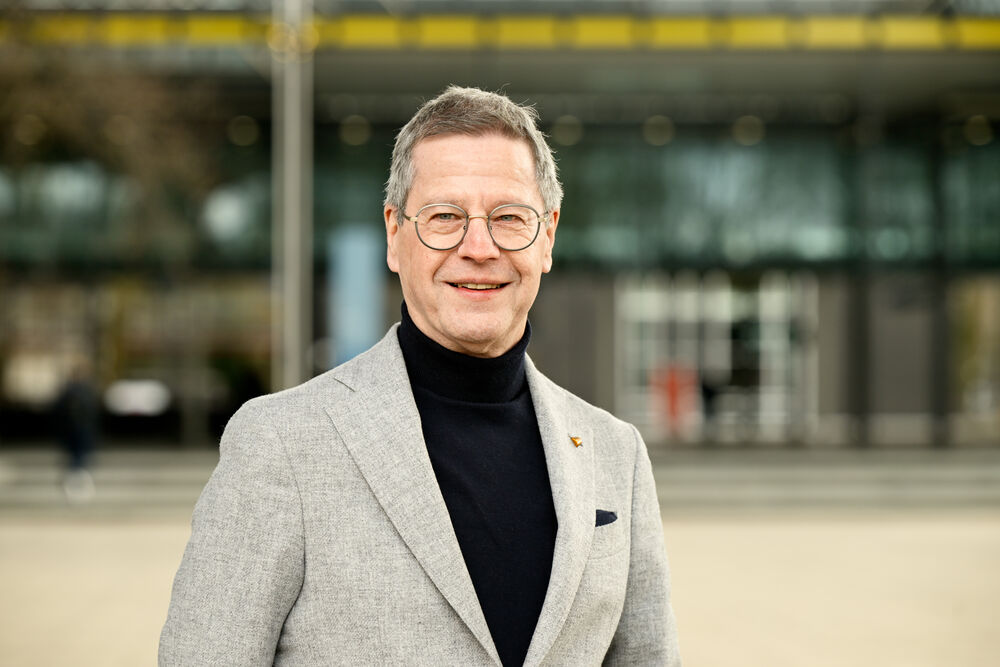
Janssen adds: “Are you resilient enough to have a constructive conversation with your leader? You need to be able to have a discussion on equal terms. We’re not there yet.”
Although conversations should become more equal, this does not mean that hierarchical structures at the university will change, he says. “But do you literally experience hierarchy as a problem, or do you say: it’s an organizational chart, but it functions well? That’s the big difference.”
Lessons in self-awareness
The first group to receive leadership training consists of the Executive Board itself, the deans, and the directors. The kickoff takes place in July, followed by several one-and-a-half-day training sessions running through April next year, covering topics including self-awareness and open dialogue.
Participants will also be expected to practice and reflect with a buddy. And there will be team dynamics sessions.
Mølby-Bueters: “An external consultant will observe how we work together, how we respond to one another, and what happens within the group dynamics.”
Taking ownership
Meanwhile, a tender process is underway for a broader rollout across the university. This summer, the university will also launch a digital learning platform where employees can create their own learning plans. The goal is to give them greater ownership and responsibility for their own development.
According to Janssen, personal responsibility is easy to talk about, but employees need proper guidance to develop it. “At least, I don’t underestimate it, because my experience tells me it’s not that simple.”
This article was translated using AI-assisted tools and reviewed by an editor.
Discussion