

Dutch Design soup cup
Dutch Design Week is a paradise for Industrial Design students like Jort Postema. So he immersed himself in the event during its most recent edition. Yet there were a few things that bothered him.
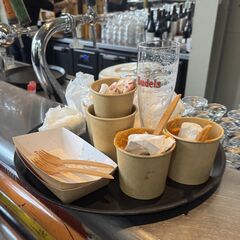
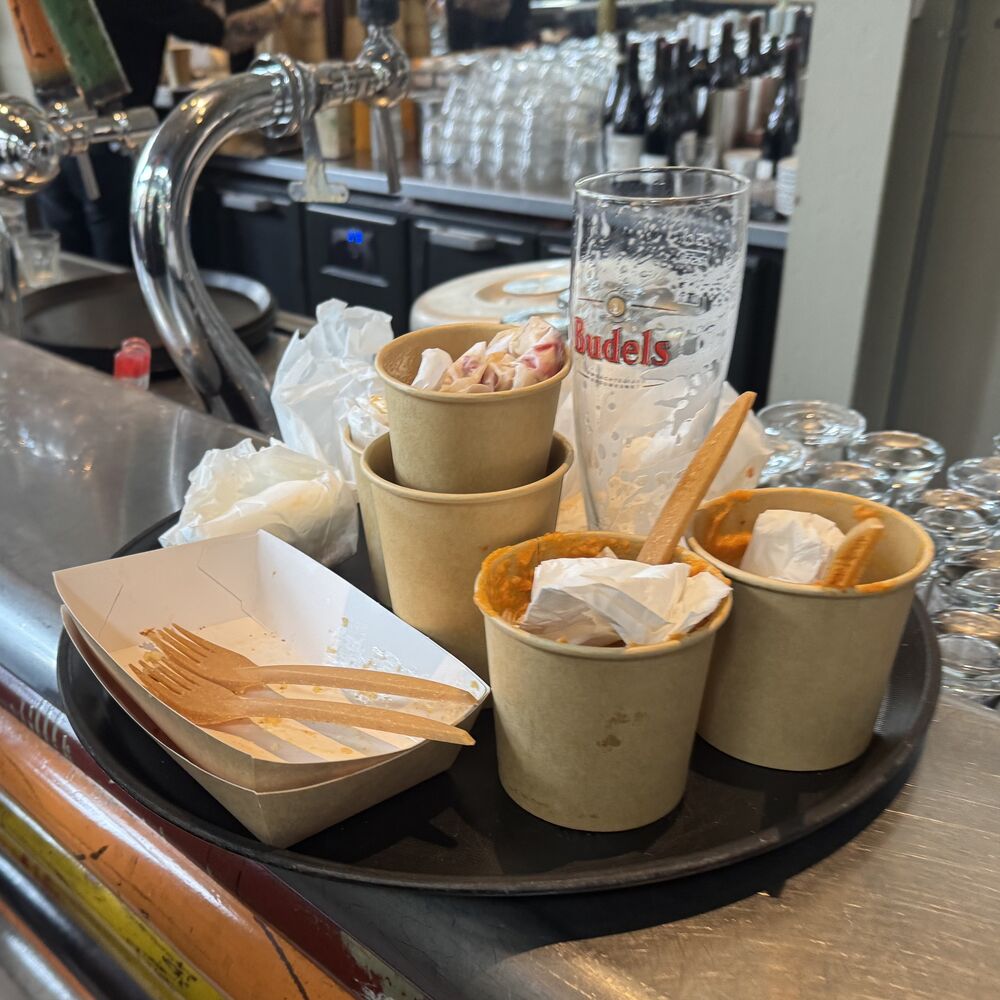
I took the photo below of a serving tray at one of the Dutch Design Week (DDW) venues. It shows a glass, which is simply washed after use. Next to it are four cardboard soup cups, paper containers, wood-colored forks made from some kind of bioplastic, and a crumpled pile of napkins. Everything is disposable.
I took this photo because it raises a question for me: what transitions are we actually putting into practice at DDW?
Circularity
DDW is my favorite event in Eindhoven. For nine days, we get to see designs that explore, among other things, how we can live, build, and consume differently. But step into a coffee bar during the event, and suddenly you are transported ten years back in time.
What requirements does the DDW organization impose on participating venues that serve food and drinks? At one venue, coffee was served in two disposable cups stacked inside each other because a single cup was too hot to hold. Twice as much waste, then.
At other venues, all the tableware was disposable: containers, cups, and cutlery. How can we, as designers, contribute to solutions for major societal challenges if we cannot come up with a creative solution for a soup bowl?
I know plenty of designers who would be eager to come up with an elegant circular system for this, but apparently, DDW does not consider reuse a firm requirement for participating venues.
Most likely, everything is perfectly compliant with the rules. Since 2024, reusable tableware has been the national standard for food and drinks consumed on-site. However, there is an exception for situations such as events: disposable tableware is permitted, provided that 80 percent of it is collected for recycling.
That means DDW would meet the minimum requirements, even though you would expect the organization to want to set a good example.
The good news is that it is entirely possible. Since March, Eindhoven has had a social washing facility for reusable cups. It is a partnership between the company CupXchange and social employment organization Ergon. The work is carried out by people who face barriers to entering the labor market.
Local, circular, and socially responsible. The kind of systemic solution you would expect to see on a foam board at an exhibition or hanging from a fishing line in the Klokgebouw. All DDW had to do was choose to put it into practice.
The mobility transition
Accessibility is another area where DDW is missing an opportunity. On paper and online, DDW puts cycling center stage, but in practice, many venues lacked adequate bicycle parking. Meanwhile, visitors were given free rides between venues in stylish, albeit electric, cars: the Polestar Design Rides.
When I went to the Graduation Show and searched in vain for somewhere to park my bike at the Microstad venue, the Polestar dropping visitors off right outside seemed like a much easier option.
That is at odds with the direction Eindhoven is taking these days, with an increasing focus on cycling, public transportation, and shared mobility. And since the bicycle may well be the ultimate example of Dutch Design, our cycling infrastructure would have been much more deserving of the spotlight than the car.
To me, the difference between design and art is that design solves a problem or communicates something. How much value does our field really have if we exhibit solutions to major societal challenges but fail to implement them at our own events?
Jort Postema is a TU/e Industrial Design student and works at the GO Green Office. The views expressed in this opinion piece are his own.
This opinion was translated using AI-assisted tools and reviewed by an editor.
Discussion