- Home Stretch
- 30/09/2026

Home Stretch | Happy faces in the gym
From pull-up bar stress to gym class fun: evaluation tool gets children moving
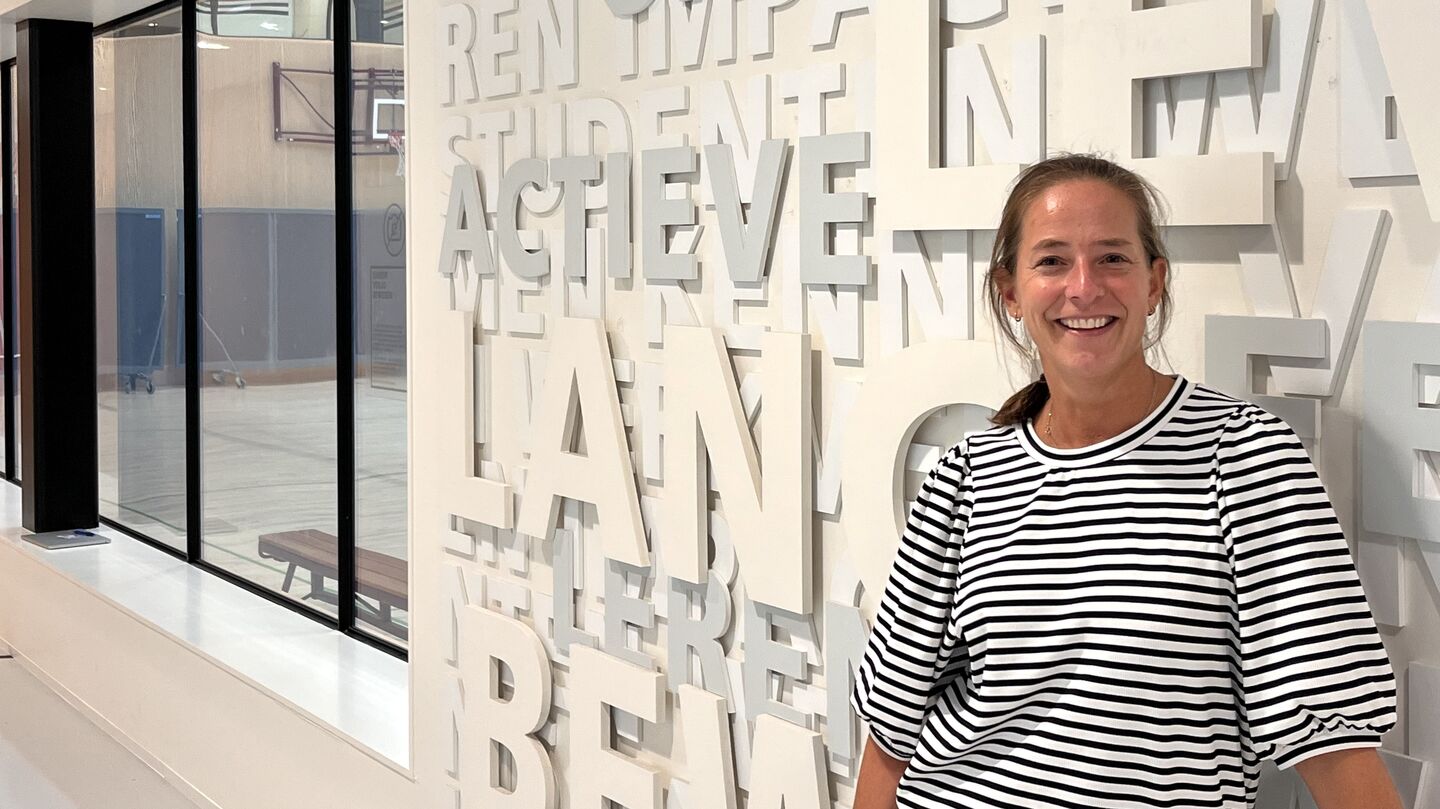
How do you make sure every child leaves gym class with a smile? TU/e PhD candidate Anoek Adank—who works as a lecturer-researcher at Fontys Sporthogeschool—studied how gym class influences the physical activity and sedentary behavior of elementary school children. Her dissertation provides teachers with a practical guide to making physical education more enjoyable for children.
Not everyone looks forward to school gym. There’s the stress of choosing teams—hopefully you won’t be the last one picked this time—, struggling to keep up in a game of tag, or yet another game of softball.
Anoek Adank is not one of them. An avid athlete herself, the TU/e researcher looks back fondly on physical education classes during her own elementary school years.
“It makes a difference when you genuinely enjoy all kinds of sports and have a nice group of fairly active classmates around you. Then moving together is simply great. But because children differ in skills, interests, and self-confidence, enjoying gym class does not come naturally to every child.”
Moving for life
After gaining years of hands-on experience as a physical education teacher, Adank wanted to improve physical education more broadly, with the aim of helping children enjoy gym class more, she says enthusiastically.
“Because they take that enjoyment with them beyond gym class, and it lays the foundation for a lifetime of physical activity. Every child deserves that.”
She has since worked as a lecturer and researcher at Fontys Sporthogeschool. To gain a better understanding of elementary school children’s physical activity and which aspects of gym class affect it, Adank secured a ‘Promotiebeurs voor leraren’ in 2017 and began her PhD research at TU/e alongside her job.
Within Steven Vos’s research group, Design and Analysis of Intelligent Systems for Vitality and Leisure Time Sports, she launched the study Stimuleren van een Actieve Leefstijl door Top gymOnderwijs (SALTO). In addition to being a professor at TU/e’s Department of Industrial Design, Vos is also Head of Research at Fontys Sporthogeschool.
The publication of Adank’s dissertation—a practical guide for teachers to improve gym class and make it “meaningful”—marks the end of the SALTO research project. At the same time, the researcher sees this conclusion mainly as a new beginning: a starting point for change in physical education.
A sedentary generation
Because something needs to be done about children’s physical activity, she emphasizes. It has been known for years that children do not get enough exercise, but Adank’s latest study produced some highly concerning figures.
“We see that 40 percent of elementary school children do not meet the physical activity guidelines. And those guidelines call for just 60 minutes of moderate-intensity activity a day, which is hardly excessive, especially when you consider that playing outside and gym classes count toward that total.”
On top of that, children spend a lot of time sitting still. “Our studies show that an elementary school child spends an average of seven to nine hours sitting each day, out of the 13 hours they are awake. That has a huge impact on children now, but certainly also later in life. It’s no coincidence that we’re increasingly hearing that we need to significantly reduce the amount of time we spend sitting.”
Throwing the ball onto the court
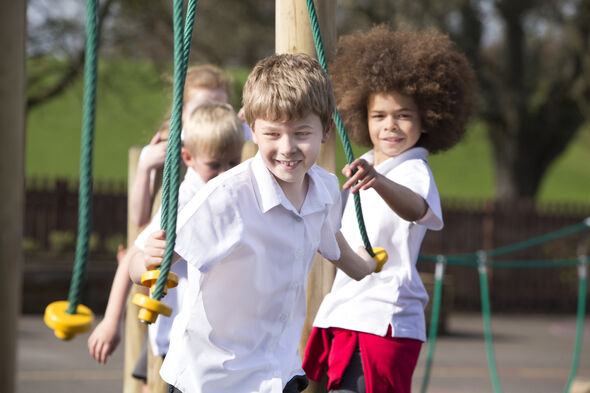
According to Adank, gym class can play an important role in developing an active lifestyle. “A gym class is about more than throwing a ball onto the court and blowing the whistle after an hour. But how can it do more? What makes a child enjoy gym class? What does that require from the teacher?”
So she went back into the gym. She observed classes, but above all, she asked elementary school students in diverse groups about their gym classes.
“Children are very capable of telling us what they need in a gym class and what is missing from their current classes. We see many teachers struggling with how to structure their gym classes. It’s not easy: what works for one child does not automatically work for another.”
She also saw major differences in the organization and content of gym classes. At around three-quarters of Dutch elementary schools, gym class is taught by a specialist physical education teacher. In the southern Netherlands, Adank mainly saw a combination during her research: one class taught by a specialist teacher and a second hour taught by the child’s regular classroom teacher.
Enriching the lesson
No two children or gym classes are the same, yet Adank was able to compile a list of no fewer than 32 factors that teachers can adjust to make gym class more enjoyable. For practical use, she condensed these into ten dimensions.
Teachers can use these ten dimensions in every gym class to create a richer, more educational, and more positive environment, Adank explains. Can she give examples of such lesson enhancers?
“Take grouping, for example. Children find it very important that a teacher explains why a particular grouping has been chosen – for example, based on motor skills or, for the sake of competition, separating boys and girls for one activity. Who you are grouped with affects how much you enjoy the game. A brief explanation of why the groups were formed helps everyone get off to a more positive start.”
Explanation is also important in other areas, Adank emphasizes. “In our interviews, we often heard that children enjoy being active together and want to learn from one another at their own level, but they also like having the freedom to make their own choices. For example, they might adapt a rule in a game of tag or choose the difficulty level of a balancing course. As a teacher, you can give focused assignments with a specific objective, while making that objective clear to the children.”
Within those boundaries, children can then explore for themselves. That sometimes requires teachers to learn to let go. “A gym is a dynamic environment. As a result, teachers often want to maintain extra control, while children actually need more freedom.”
According to Adank, there is therefore no one-size-fits-all gym class.
“The key is recognizing and understanding the needs of the group. Thirty years in front of a classroom does not automatically mean you know everything. It is essential for teachers to remain open to change. Be aware of the differences within your group and look at what children need. Ultimately, you are teaching a gym class for them, not for yourself. That is the starting point for better physical education.”
Children’s questions
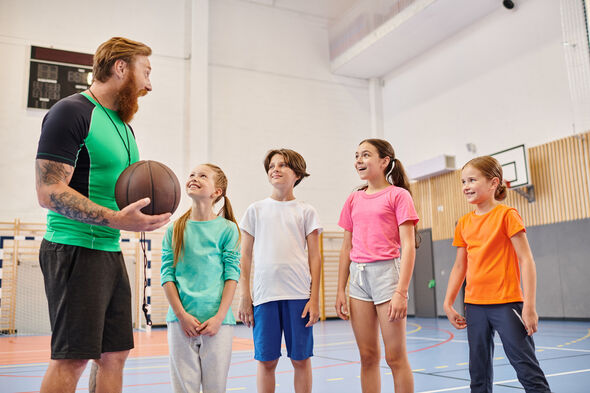
Because students’ voices are still not sufficiently heard in physical education, Adank investigated how technology can support teachers in structured reflection.
Together with teachers and elementary school children, she developed a feedback tool and an online reflection tool to make it easier to identify students’ needs.
“Simply asking after every class whether the gym lesson was fun and then hearing a resounding ‘yes’ doesn’t tell you enough. Our tool allows teachers to ask questions that really matter to children, using the ‘Ten’ as a guide. For example, whether grouping works well, whether they are challenged enough, and whether they can learn during the class.”
Teachers can adapt the questions to their own group. The reflection tool then helps teachers reflect step by step. According to Adank, tests at schools showed that three evaluation moments per year can make a real difference. “Children feel seen, and teachers get to know the group better, allowing them to make more targeted improvements to their lessons.”
Adank hopes to introduce this new way of evaluating and reflecting to the next generation of physical education teachers, whom she also helps train. “Through internships, this should quickly become standard practice in elementary schools. Happy faces after a gym class are a good start, but we really hope we can get children moving again.”
Anoek Adank will defend her dissertation on Wednesday, September 30, at the Department of Industrial Design.
PhD in the Picture
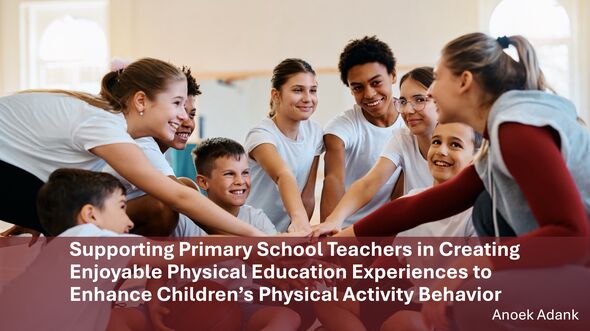
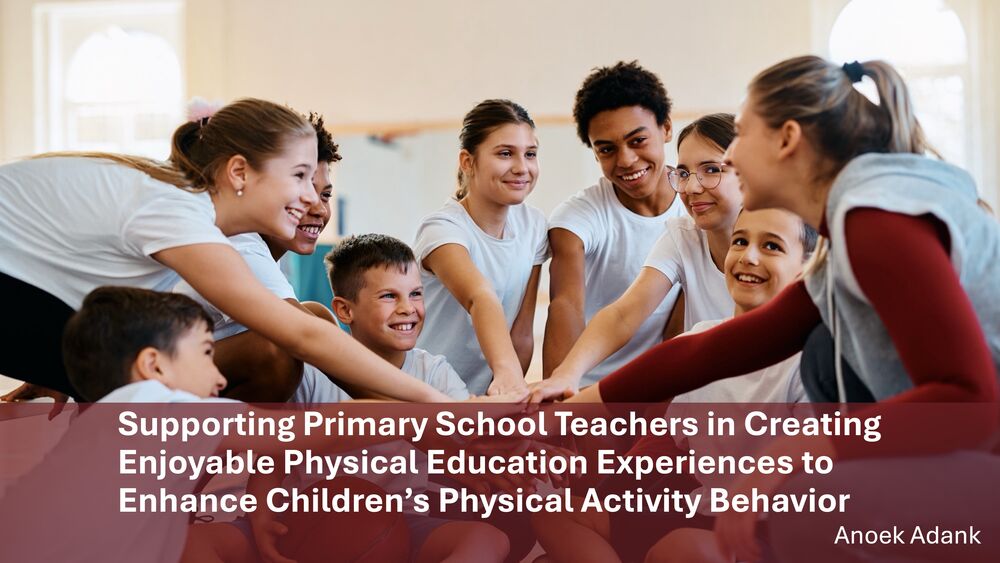
What do we see on the cover of your dissertation?
“A group of children with their gym teacher, as one team. It symbolizes the message I want to convey: we create physical education together and look together at what we need.”
You’re at a birthday party. How would you explain your reserach in one sentence?
“How teachers can promote children’s enjoyment of gym class and how technology can support them in doing so and improve teaching. Enjoyment is a difficult term, especially in the context of gym class. It’s already enough to spark a lot of discussion.”
How do you unwind outside your research?
“By far, the number one thing is being active! Going for a good run with my track and field club, or heading into the woods for a long walk with a friend. I, too, have exercised less over the past few years than I would have liked, but hopefully that will change now.”
What advice would you have liked to receive when you were starting your PhD?
“I found it difficult to say ‘no,’ which is certainly not always easy when you’re pursuing a PhD alongside a regular job. But to stay focused, it’s important to set boundaries around your work. So dare to say ‘no.’”
What’s the next chapter?
“I’ll continue working as a lecturer-researcher at Fontys Sporthogeschool, and motivated by the results of my PhD research, I really want to make an impact on physical education in practice. That means we have a lot of work to do in teacher education. Ultimately, it’s the small steps that can get children moving.”
Discussion